Commercial Refrigeration Preventive Maintenance Guide
Preventive maintenance helps commercial refrigeration systems run more reliably, support food safety, and reduce avoidable performance drift. This guide explains what maintenance typically covers, common warning signs, and when to schedule professional service.
Why Preventive Maintenance Matters
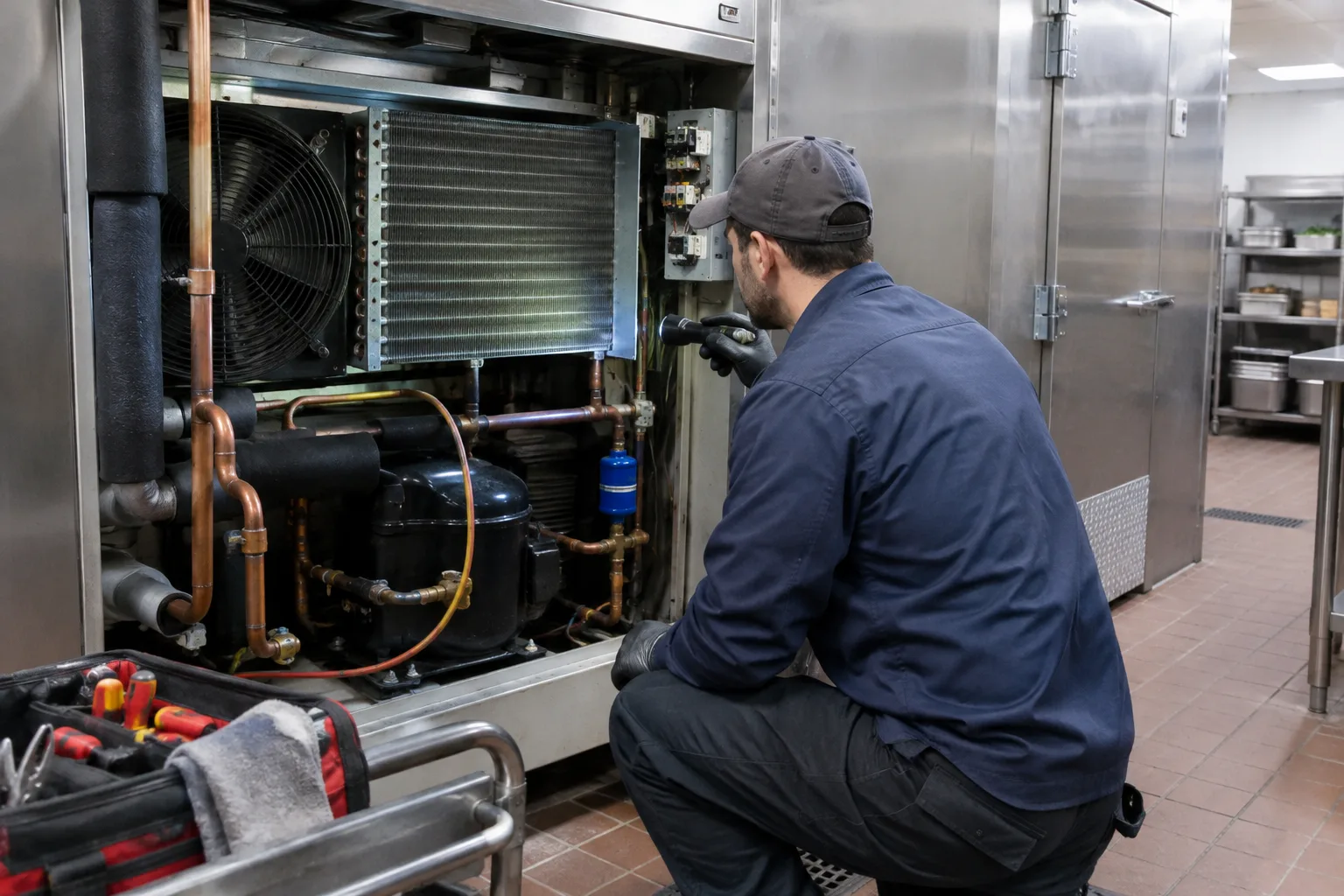
Commercial refrigeration preventive maintenance helps support reliable operation, stable temperatures, and energy-conscious performance in food-service and other commercial settings. For restaurants, supermarkets, and property managers, routine upkeep is not just about avoiding breakdowns. It also helps equipment stay closer to its intended operating range as parts wear, dirt builds up, and settings drift over time.
Golden Gate Refrigeration provides commercial refrigeration repair, emergency refrigeration repair, walk-in cooler repair, walk-in freezer repair, and commercial HVAC service in the San Francisco Bay Area and Greater Sacramento, California. Preventive maintenance is a practical way to reduce avoidable strain on refrigeration systems before minor issues become larger service problems.
Is Your System Overdue?
A refrigeration system may need attention if temperatures are harder to hold, the equipment runs longer than usual, or cabinets and walk-ins show signs of inconsistent cooling. Other early warnings can include unusual noise, frequent cycling, ice buildup, dirty coils, or doors that do not seal properly.
These symptoms do not point to one single cause. They can reflect maintenance issues, airflow restrictions, control problems, or component wear. A careful inspection helps identify which conditions are affecting performance.
What Preventive Maintenance Covers
Preventive maintenance for commercial refrigeration usually includes inspection, cleaning, adjustment, and basic testing of key system components. The exact scope depends on the equipment type, but it often focuses on the parts most likely to affect temperature stability and operating efficiency.
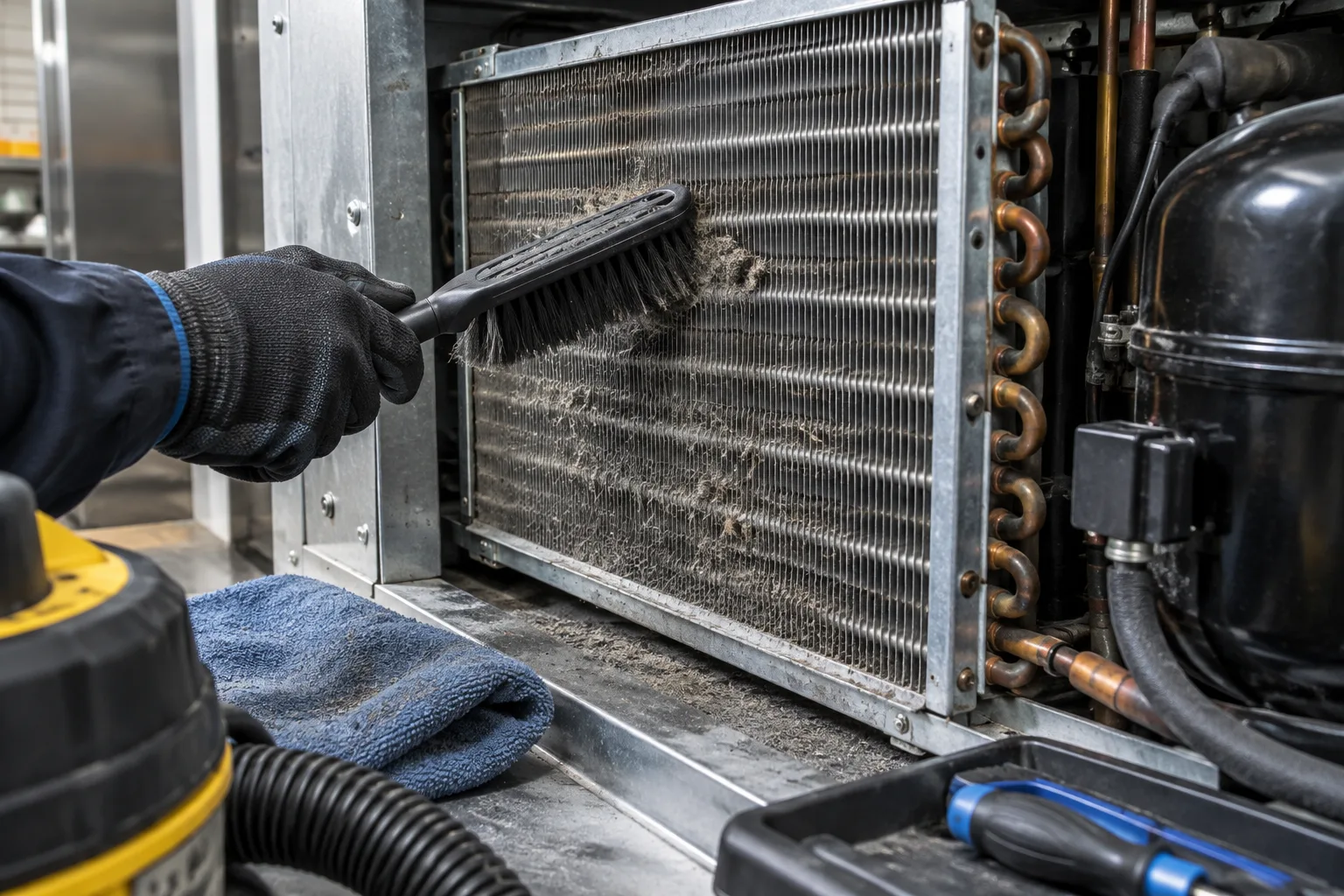
- Cleaning coils and related heat-transfer surfaces
- Checking door gaskets, hinges, and closures
- Inspecting fans, drains, and defrost components
- Verifying controls, sensors, and temperature settings
- Looking for signs of refrigerant leaks or abnormal wear
- Reviewing general condition of walk-in coolers, freezers, and refrigerated cases
Why Refrigeration Systems Drift
Even well-maintained systems can drift away from optimal performance over time. Dust and grease can reduce heat transfer. Worn gaskets can allow warm air infiltration. Defrost issues can increase frost buildup. Loose electrical connections or failing components can also affect how consistently the system operates.
In commercial environments, small changes matter because refrigeration equipment often operates under steady demand. When airflow, seals, or controls are not working as intended, the equipment may need more effort to maintain the same result.
Common Warning Signs
Business owners and property managers often notice maintenance concerns before a complete failure occurs. Common signs include:
- Temperatures that fluctuate or take longer to recover
- Excess frost or ice accumulation
- Compressor or fan noise that sounds different from normal
- Water pooling near the unit or drain problems
- Higher energy use without a clear operational change
- Warm spots inside a walk-in cooler or freezer
These signs should be evaluated promptly, especially when temperature control is important for product protection and daily operations.
Operational Risks And Costs
Missed maintenance can affect more than equipment performance. In food-service and retail environments, refrigeration problems can create operational interruptions, product loss risk, and additional strain on staff. If equipment is struggling to maintain proper conditions, managers may need to respond quickly to protect inventory and keep operations moving.
Routine maintenance can also support energy performance. The U.S. Department of Energy notes that commercial refrigeration efficiency depends on system condition and proper operation, which makes upkeep an important part of long-term equipment care.
How Technicians Assess Systems
During a preventive maintenance visit, a technician typically looks for the conditions that most often affect refrigeration reliability. That can include a visual inspection, a review of operating behavior, and checks on the parts most connected to temperature control.
- Inspecting coils, fans, and drainage paths
- Checking seals, latches, and door alignment
- Reviewing sensor placement and controls
- Observing system operation for unusual cycling or noise
- Identifying visible wear, leaks, or airflow restrictions
The goal is not only to find existing problems, but also to identify conditions that may lead to performance loss if they are left unaddressed.
Maintenance Mistakes To Avoid
One of the most common mistakes is treating refrigeration maintenance as a response only after temperature problems appear. By then, the system may already be dealing with avoidable strain from dirt, airflow restrictions, seal wear, or drainage issues.
Other mistakes include ignoring small changes in cycling behavior, blocking airflow around the equipment, overlooking door gaskets, and skipping routine cleaning around coils and drains. In commercial settings, it is also easy to forget that refrigeration and HVAC conditions are connected. Poor room ventilation or excess heat near equipment can add stress to cooling systems and make it harder to maintain stable performance.
A Practical Maintenance Checklist
A basic maintenance program should focus on the parts of the system that most directly affect temperature control and efficiency. While exact procedures vary by equipment type, a useful checklist often includes regular coil cleaning, inspection of gaskets and doors, checks for frost or ice buildup, drain inspection, fan and airflow verification, and confirmation that controls and temperature settings are operating as intended.
For walk-in coolers and freezers, it is especially important to watch for damaged seals, blocked airflow, and defrost-related issues. For restaurants and supermarkets, preventive maintenance should also support dependable daily operation so staff can focus on product handling rather than avoidable equipment trouble.
What To Track Between Visits
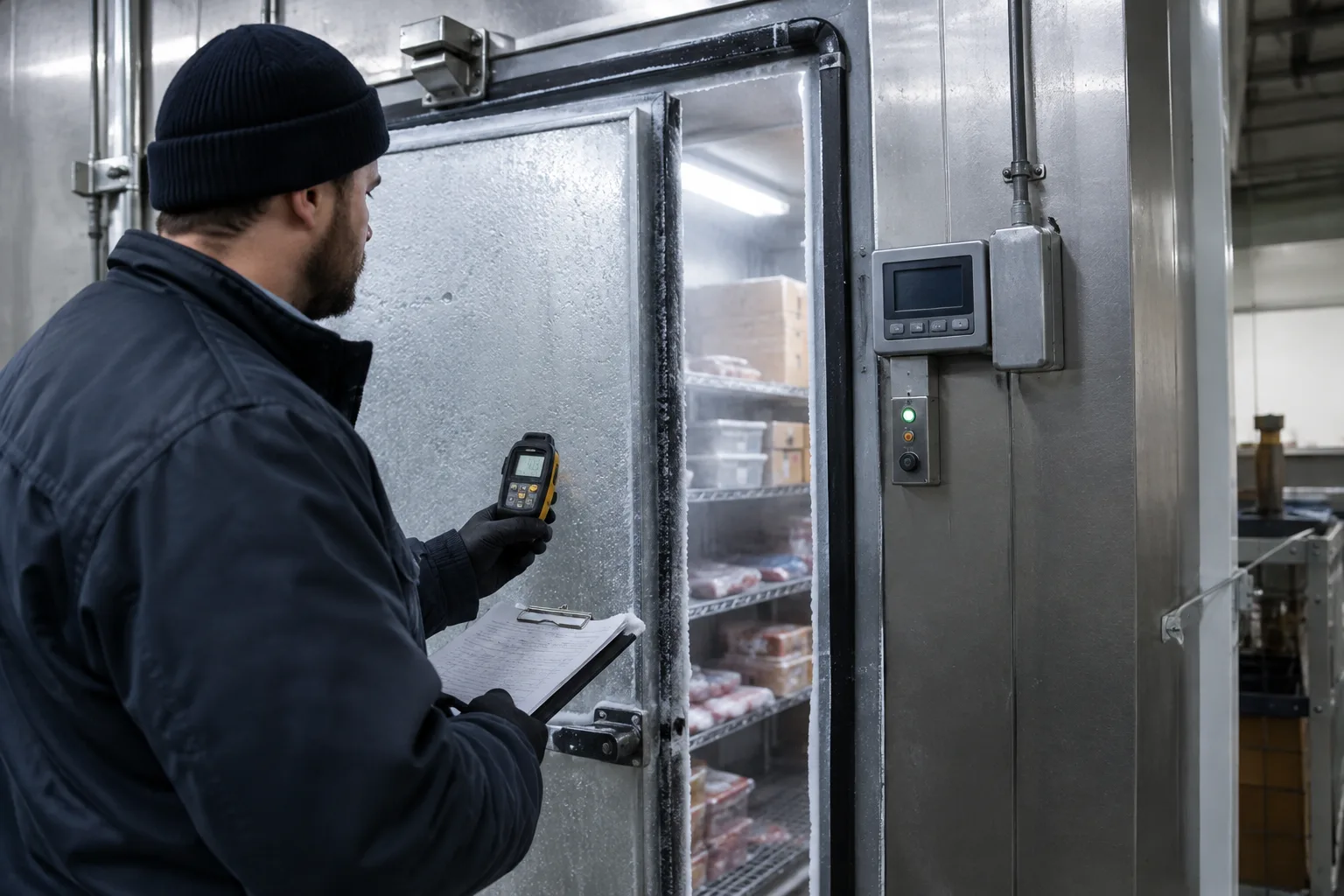
Between service visits, managers can help protect refrigeration performance by tracking a few simple conditions. Temperature logs are useful because they show whether the equipment is holding steady or drifting over time. Noise changes, longer run times, and repeated icing are also worth noting, along with door closure issues, water around the unit, or visible dust buildup on accessible surfaces.
These observations are not a substitute for professional service, but they can help identify when a small issue is becoming a larger one. If the equipment starts showing repeated warning signs, a technician should evaluate the system before the condition affects inventory or daily operations.
When To Schedule Service
Commercial refrigeration should be inspected when performance changes are becoming noticeable, when warning signs repeat, or when the equipment has not received routine maintenance in a while. Service is also appropriate after product temperatures become harder to control, after ice buildup keeps returning, or when a walk-in cooler or freezer shows visible wear that may be affecting operation.
Golden Gate Refrigeration serves the San Francisco Bay Area and Greater Sacramento, California, with commercial refrigeration repair, emergency refrigeration repair, walk-in cooler repair, walk-in freezer repair, and commercial HVAC service. Business owners and property managers can call (415) 823-9890 or email Info@goldengateref.com to discuss equipment concerns and confirm availability, or use the website service-request form to request help.
Common Maintenance Questions
Preventive maintenance frequency depends on equipment type, operating conditions, and how heavily the system is used. High-demand kitchens, retail food environments, and walk-in units that run continuously may need closer attention than lightly used equipment.
Many business owners ask whether they should wait for a failure before calling for help. In most cases, the better approach is to address recurring temperature issues, noise changes, ice buildup, or drainage problems early. That helps reduce the chance that a minor maintenance issue becomes a larger repair problem.
Another common question is whether HVAC matters for refrigeration upkeep. It can, because ambient heat, airflow, and room conditions affect how hard cooling equipment has to work. That is one reason commercial refrigeration and commercial HVAC are often managed as related parts of a building’s overall operation.
Build A Maintenance Plan
Preventive maintenance is one of the most practical ways to support dependable commercial refrigeration. It helps businesses stay ahead of temperature drift, reduce avoidable wear, and keep equipment working closer to its intended performance over time.
If you manage a restaurant, supermarket, or commercial property in the San Francisco Bay Area or Greater Sacramento, Golden Gate Refrigeration can help you discuss maintenance needs and plan the next service step. Call (415) 823-9890, email Info@goldengateref.com, or submit the website service-request form to get started.