Assess Grocery Cases, Racks and Cold Rooms as a Connected Operation
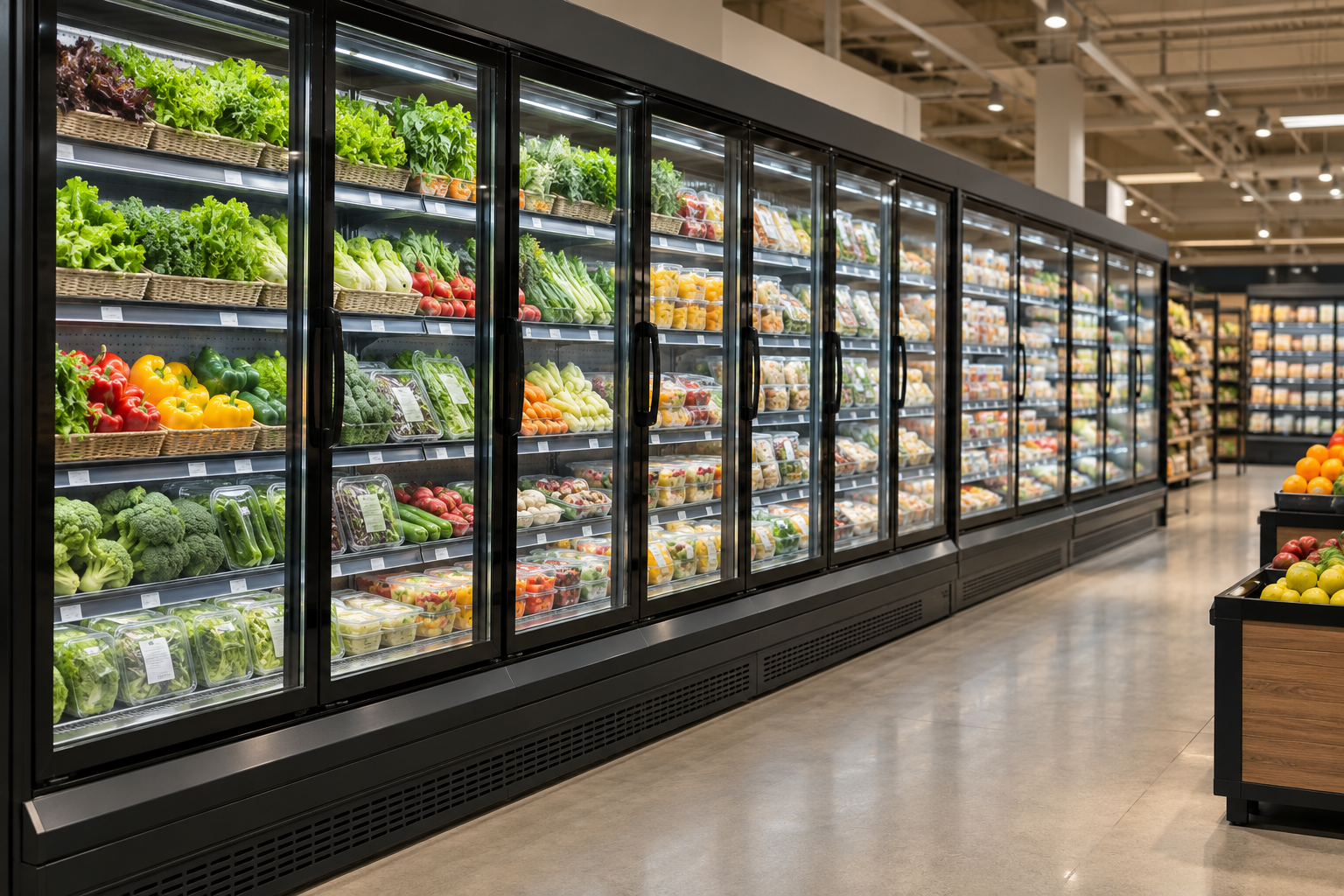
We service grocery refrigeration equipment, including refrigerated display cases and cold rooms. Tell us which equipment is affected and whether products are staying at the right temperature.
Is the problem local to one display or shared across a group?
List the affected case identifiers and note which nearby displays are operating normally. Where equipment shares a rack or controls, the pattern of affected loads is important information. Include controller alarms and the time of any changes, but leave diagnosis and adjustments to the people responsible for the system.
How can merchandising affect display performance?
Product placement, obstructed grilles, door condition and manufacturer load limits are relevant to refrigerated displays. For open cases, the intended air path is part of the case design. Record any recent stock-layout or fixture changes when describing a performance problem; do not assume the only possible cause is a refrigerant issue.
What helps coordinate work in an operating grocery store?
Identify the store contact, equipment access points, delivery periods and any restrictions around shoppers or food-handling areas. Provide the site's product-protection procedures and alarm escalation contacts. A planned work discussion should separate equipment service from the operator's decisions about stock movement and food safety.
Create a case-by-case symptom record
- Case numbers, departments and affected product zones
- Shared rack or control information if already documented
- Time-stamped alarms and temperature observations
- Store access, merchandising changes and operating constraints
Questions about supermarket refrigeration
Why should I report unaffected cases as well as warm ones?
The comparison helps establish the extent of the problem. It is especially useful where cases share refrigeration or controls, although it does not replace a technical assessment.
Should staff change rack controls when several cases warm up?
Do not change unfamiliar system settings or access restricted equipment. Record the alarms and follow the store's escalation and product-protection procedures while arranging qualified assessment.
Continue planning your equipment service
Make the affected case group clear
Send the equipment identifiers and the extent of the store's refrigeration issue.