Commercial Refrigeration Leak Prevention and Compliance
Commercial refrigeration leaks can affect food safety, uptime, and compliance. Learn the warning signs, common causes, and maintenance basics that help reduce risk.
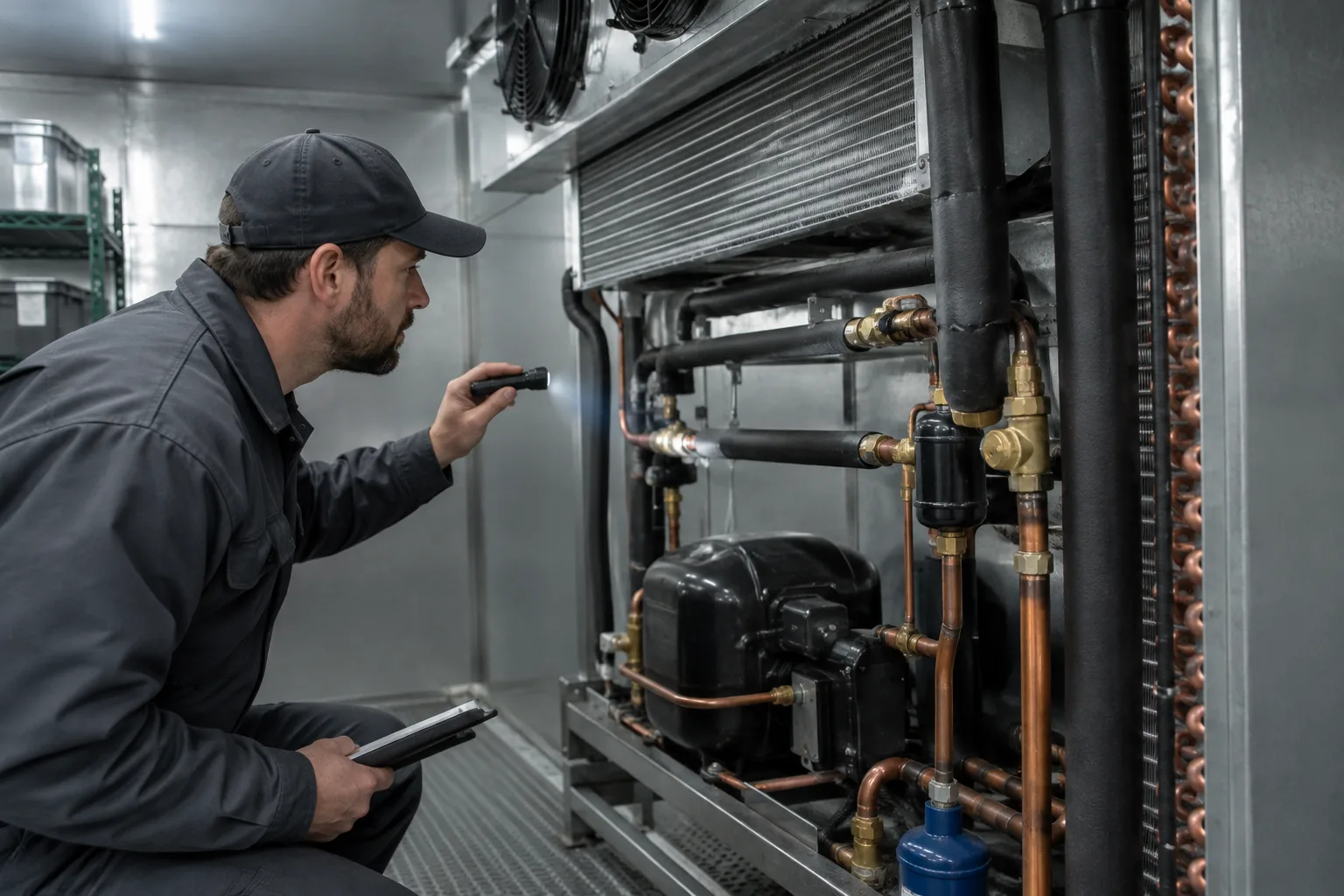
Leak Prevention Basics
Commercial refrigeration leak prevention starts with routine observation, consistent maintenance, and timely attention to small performance changes. For restaurants, food-service operations, supermarkets, and other commercial properties, even a minor refrigerant leak can affect temperature control, equipment efficiency, and the ability to keep product within target conditions.
Federal guidance on commercial refrigeration emphasizes efficient operation and proper equipment management, while ASHRAE publishes safety-related standards and technical resources for refrigeration systems. Those references do not replace site-specific service procedures, but they do reinforce a basic point: leaks should be taken seriously and checked promptly.
Golden Gate Refrigeration serves commercial customers in the San Francisco Bay Area and Greater Sacramento, California, with commercial refrigeration repair, emergency refrigeration repair, walk-in cooler repair, walk-in freezer repair, and commercial HVAC services. If you are seeing possible leak symptoms, a service call can help you confirm the issue and discuss the next step.
Possible Leak Warning Signs
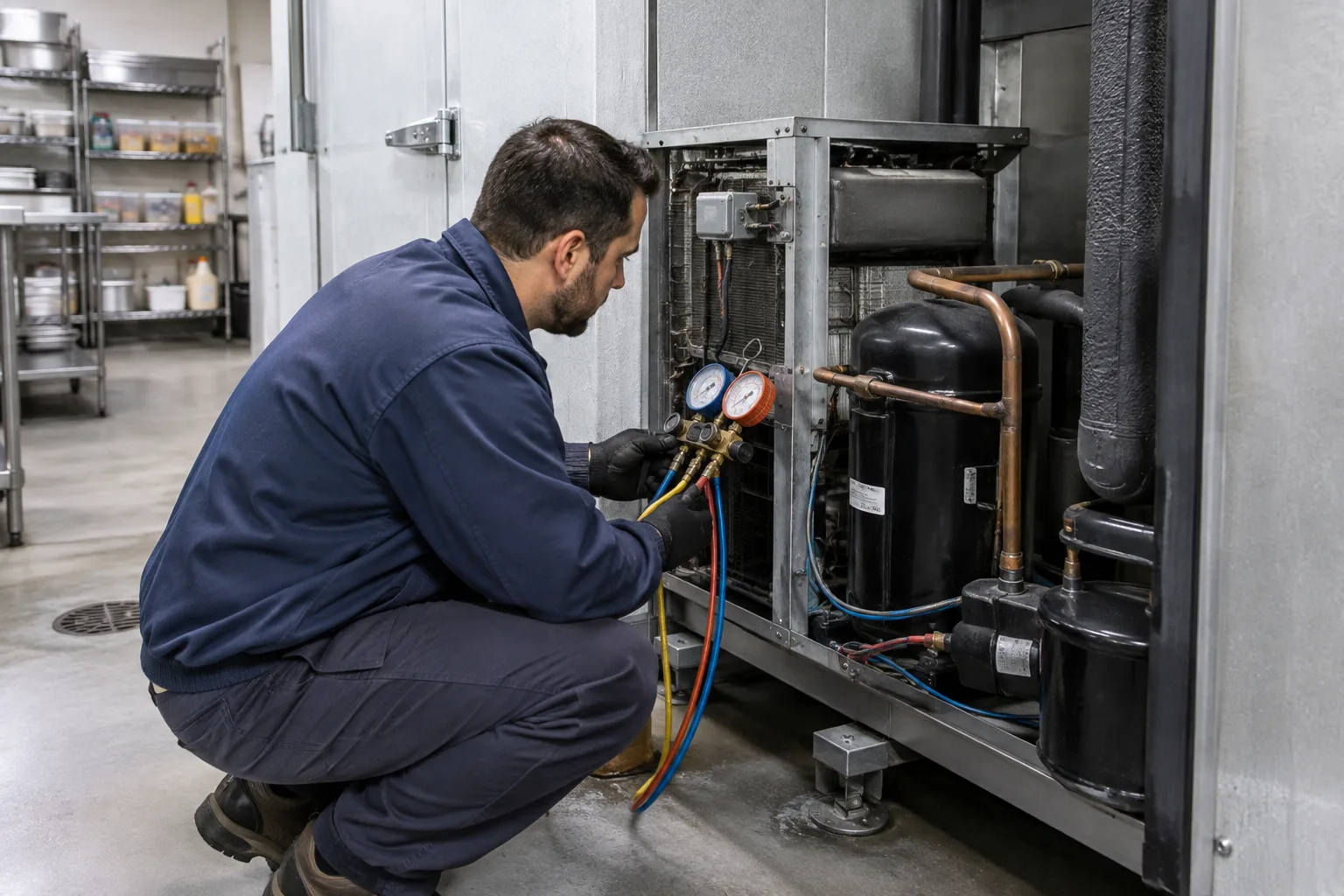
Some refrigerant leaks show up as subtle changes before a unit stops cooling effectively. Common warning signs can include:
- Rising product temperatures or a system that no longer holds setpoint consistently
- Longer run times than usual
- Ice or frost on evaporator components in unusual patterns
- Visible oil residue around fittings, valves, or coil connections
- Unexplained drops in cooling performance after vibration, service work, or equipment movement
These signs do not confirm a leak on their own. They do, however, justify a closer inspection, especially when food inventory depends on stable refrigeration.
Why Leaks Matter
Refrigerant loss can create operational and compliance concerns at the same time. From a business perspective, a leak may reduce system capacity, increase energy use, and raise the risk of product loss if temperatures drift out of range. From a regulatory perspective, commercial refrigeration systems may be subject to federal refrigerant management requirements under EPA rules, including Section 608-related obligations for certain equipment and refrigerant handling practices.
ASHRAE safety standards also matter because refrigeration systems contain pressurized components and refrigerants that require careful handling. A suspected leak should be treated as a maintenance issue, not just a comfort or efficiency concern.
Common Leak Sources
Leaks often develop where parts of the system experience movement, stress, or repeated thermal cycling. Common sources can include:
- Flared or threaded fittings
- Valve stems and service ports
- Coil connections and joints
- Vibration points near compressors or mounted components
- Areas affected by corrosion or physical damage
Maintenance attention to these areas can reduce risk, but no preventive program can eliminate every leak. That is why observation and documentation remain important.
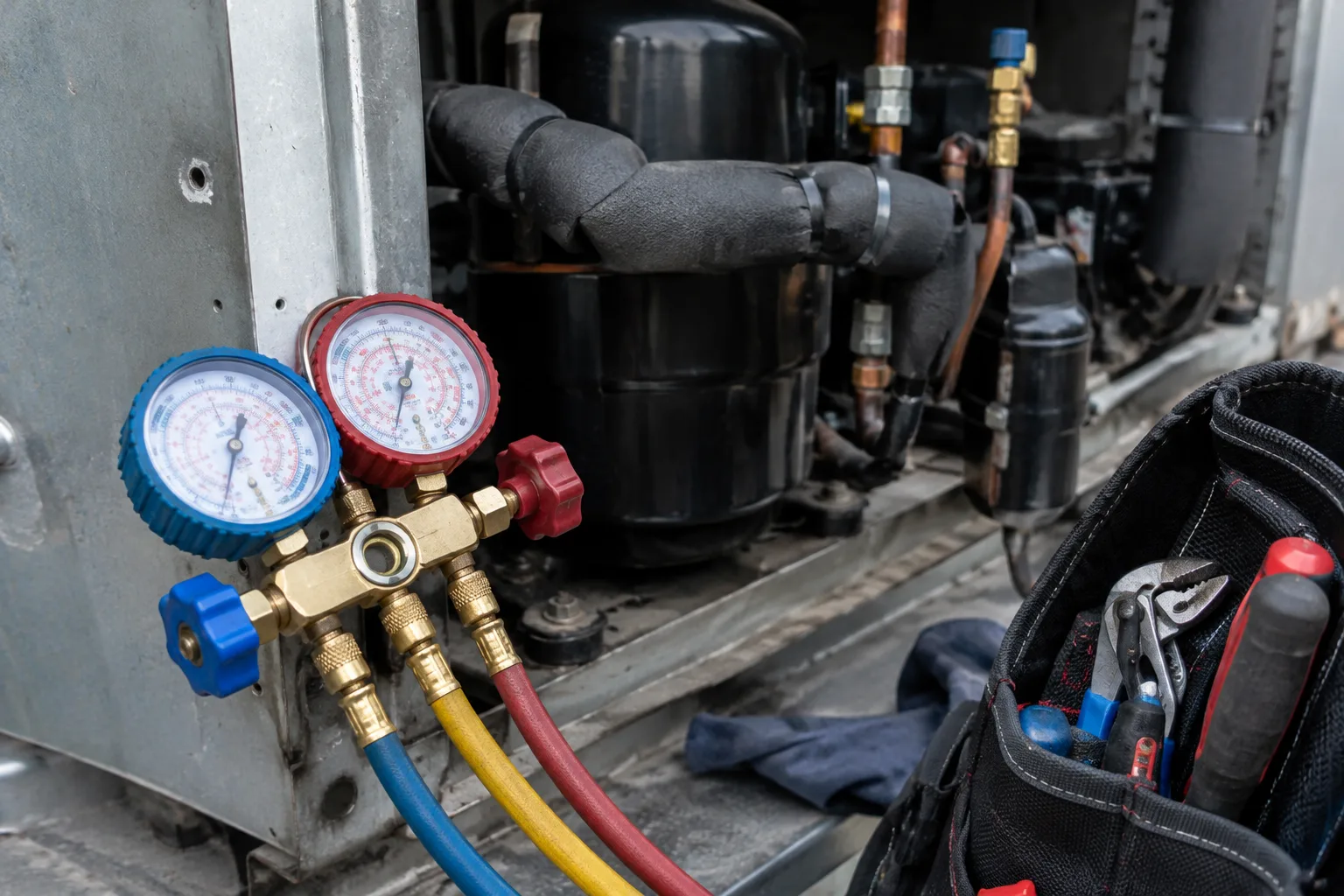
Signs Of Refrigerant Loss
Operational symptoms often appear before a leak is visible. Business owners and property managers may notice:
- Reduced cooling performance in a cooler, freezer, or refrigerated display case
- Higher-than-normal compressor run time
- Uneven temperatures from one section of the box to another
- Abnormal frost buildup or incomplete defrost recovery
- Increased noise or cycling changes compared with normal operation
These symptoms can also be caused by airflow problems, dirty coils, control issues, or component failure. A qualified technician should evaluate the system rather than assuming refrigerant loss is the only cause.
Compliance And Operating Risks
Leak-related downtime can be costly for food-service and retail operations because refrigeration problems affect inventory, service continuity, and customer expectations. They can also create documentation and compliance questions if refrigerant service is not recorded correctly or if a repair issue goes unresolved.
For this reason, preventive maintenance should include more than cleaning and temperature checks. It should also include visual inspections, service history review, and a plan for acting quickly when performance shifts suggest a leak.
How Leaks Are Checked
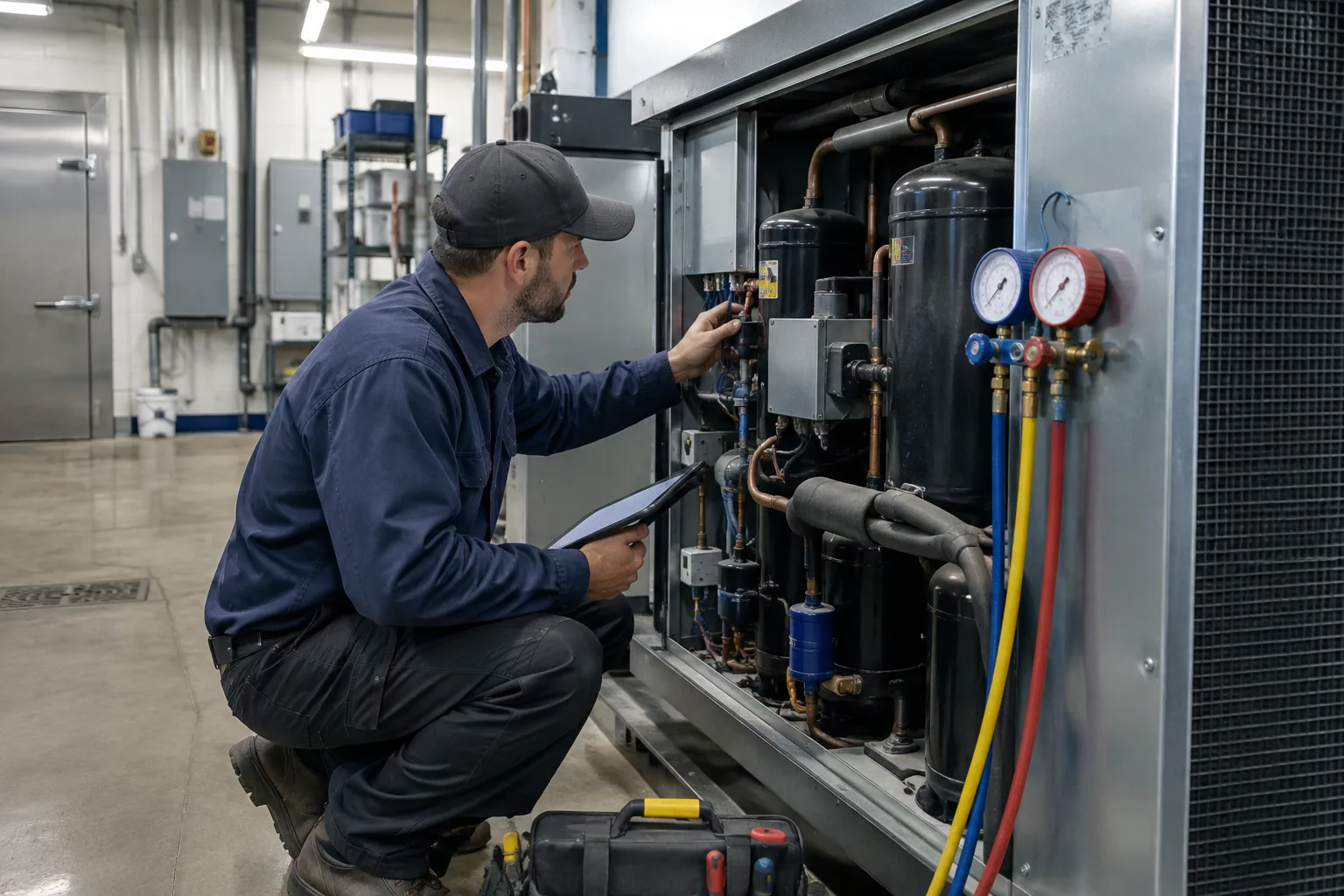
Technicians commonly confirm suspected leaks with a combination of visual inspection, performance testing, and leak-detection tools. Depending on the system and symptoms, that can include observing oil staining, checking pressure and temperature behavior, or using electronic or other approved detection methods suitable for the refrigerant and equipment involved.
Because commercial refrigeration systems vary widely, there is no single universal test that fits every case. A careful inspection process is important both for finding the source and for reducing the chance of repeated leakage after a repair.
Leak Prevention Errors
Leak prevention can be undermined by small maintenance gaps that go unnoticed until performance changes become obvious. Common mistakes include skipping routine inspections, ignoring minor frost or temperature drift, and treating recurring oil residue as a harmless cosmetic issue. Delayed reporting can also make a leak harder to trace, especially if the system continues running under stress.
Another common error is assuming every cooling problem is caused by refrigerant loss. Dirty coils, restricted airflow, control issues, and component wear can create similar symptoms. The safest approach is to document changes early and have a qualified technician evaluate the system before the problem spreads to product quality or uptime.
Leak Prevention Practices
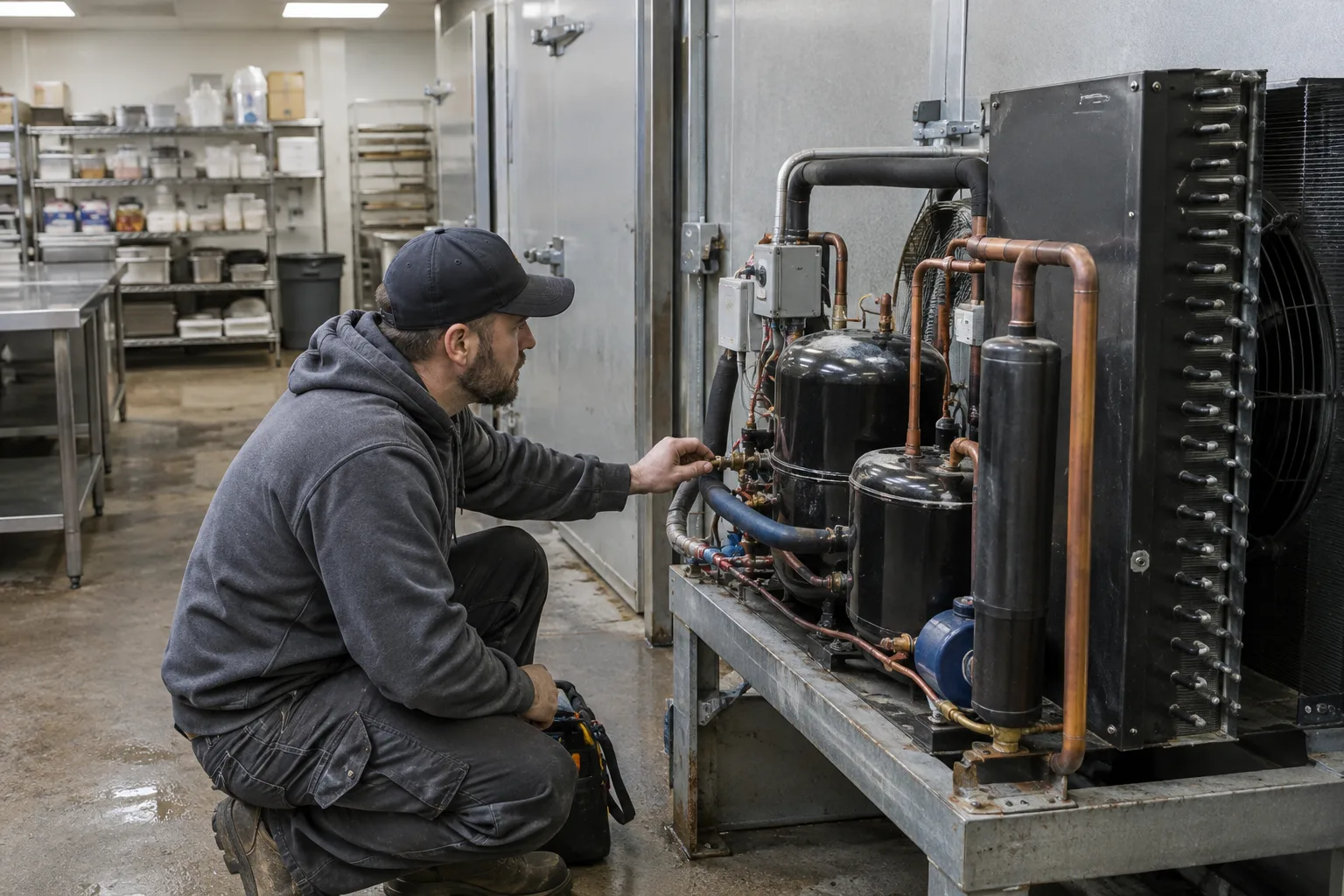
A practical preventive maintenance program starts with basic tasks that support stable operation. That usually includes cleaning coils as needed, checking airflow around the equipment, confirming that doors, gaskets, and closures are sealing properly, and watching for vibration at mounted components and piping connections. It also helps to keep service access clear so technicians can inspect fittings, valves, and coil joints without delay.
For businesses that rely on walk-in coolers and freezers, maintenance should also include scheduled temperature checks and a review of recent service history. Those records can help reveal gradual changes before they become a larger loss of refrigerant or cooling capacity. Commercial HVAC upkeep can matter too, since surrounding conditions and ventilation affect how refrigeration equipment performs in the same building.
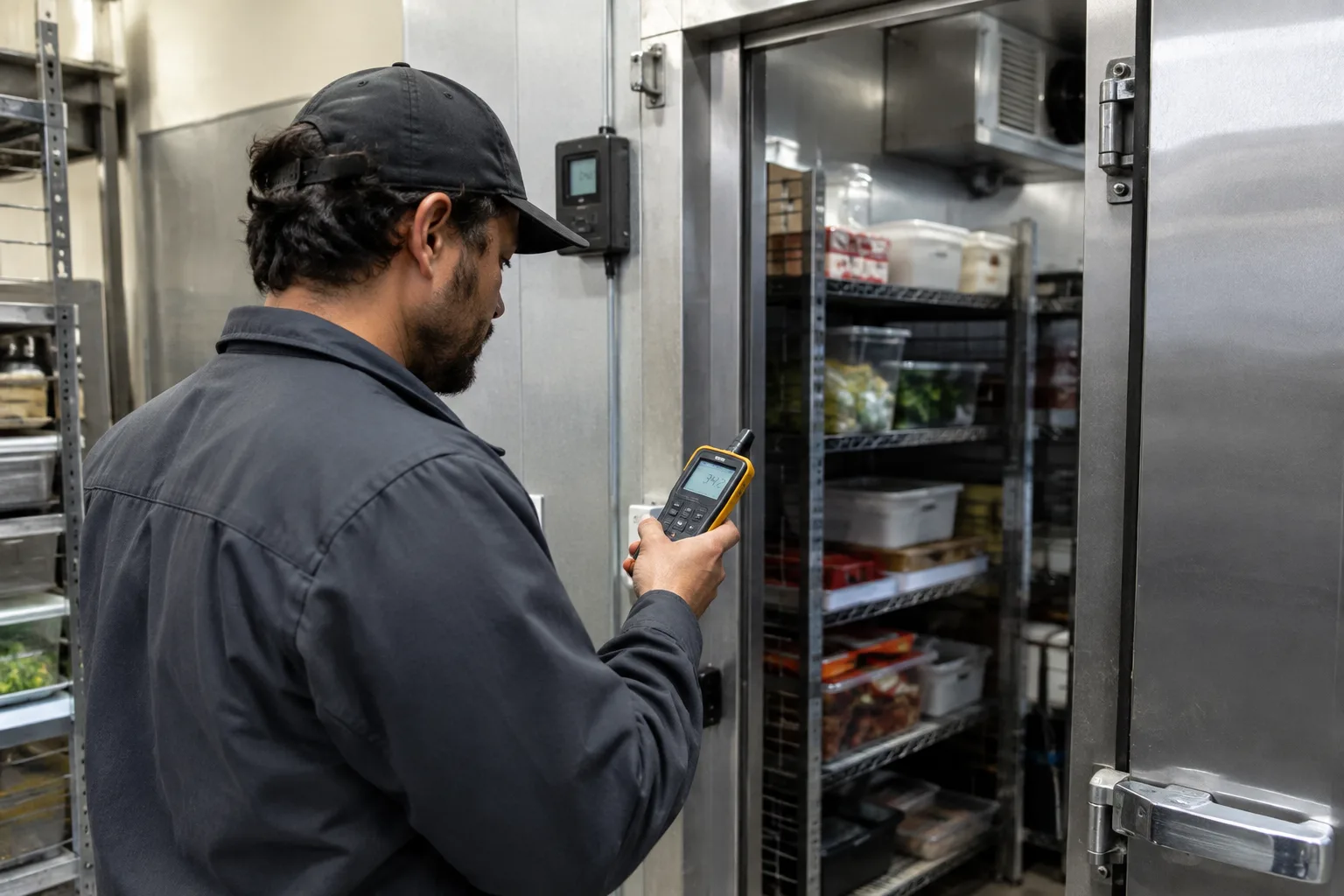
What To Track Regularly
Good monitoring makes it easier to spot a leak early and explain when something changed. Useful records include box temperatures, compressor run patterns, defrost behavior, visible frost buildup, service notes, and any recurring alarm or control warnings. If your operation uses a maintenance log, note when symptoms started and whether they appeared after a cleaning, repair, or equipment move.
Track the same observations over time rather than relying on a single check. A steady pattern is easier to compare than a one-time snapshot, and that can help a technician determine whether the issue is related to refrigerant loss or another equipment problem. Consistent records also support better communication during service visits.
When To Bring In Experts
Professional service is appropriate when temperatures drift, ice patterns change, oil appears around joints, or the equipment no longer performs the way it did under normal conditions. It is especially important to bring in a technician if the system may have a refrigerant leak, because commercial refrigeration systems involve pressurized components and refrigerant handling requirements that should be managed carefully.
Golden Gate Refrigeration provides commercial refrigeration repair, emergency refrigeration repair, walk-in cooler repair, walk-in freezer repair, and commercial HVAC services for businesses in the San Francisco Bay Area and Greater Sacramento, California. To discuss your equipment and confirm availability, call (415) 823-9890 or email Info@goldengateref.com.
Leak Compliance Questions
See the FAQs below for practical questions about inspection, reporting, and compliance. These answers are intended as general guidance, not legal advice or a substitute for site-specific service procedures.
Stay Ahead Of Leaks
Routine inspection and careful recordkeeping can reduce the chance that a small refrigerant issue turns into a larger interruption. If you manage refrigeration for a restaurant, market, or commercial property, schedule regular maintenance and act quickly when performance changes suggest a leak.
For commercial refrigeration service in the San Francisco Bay Area or Greater Sacramento, contact Golden Gate Refrigeration by phone at (415) 823-9890, by email at Info@goldengateref.com, or through the website service-request form.