Signs a Walk-In Cooler May Be Losing Refrigerant
A walk-in cooler that is losing refrigerant can show subtle performance changes before it fails to hold temperature. This guide explains the most common warning signs, why they matter, and when to call for professional diagnosis and repair.
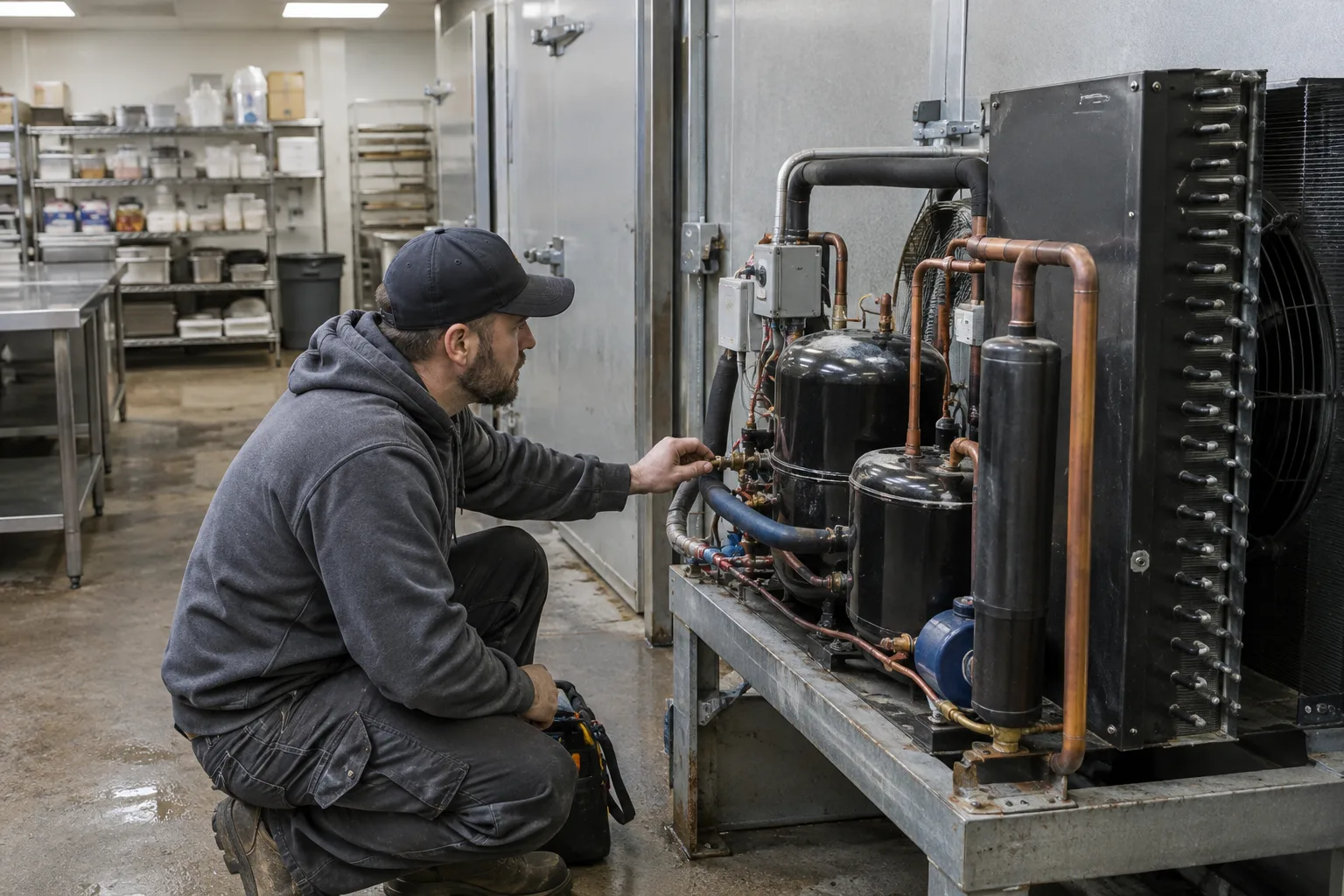
Leak Problems and Cooler Performance
A walk-in cooler depends on the correct refrigerant charge to remove heat efficiently and hold food at stable storage temperatures. When refrigerant escapes, the system may still run, but performance often changes in ways that matter to restaurants, food-service operations, supermarkets, and other commercial properties.
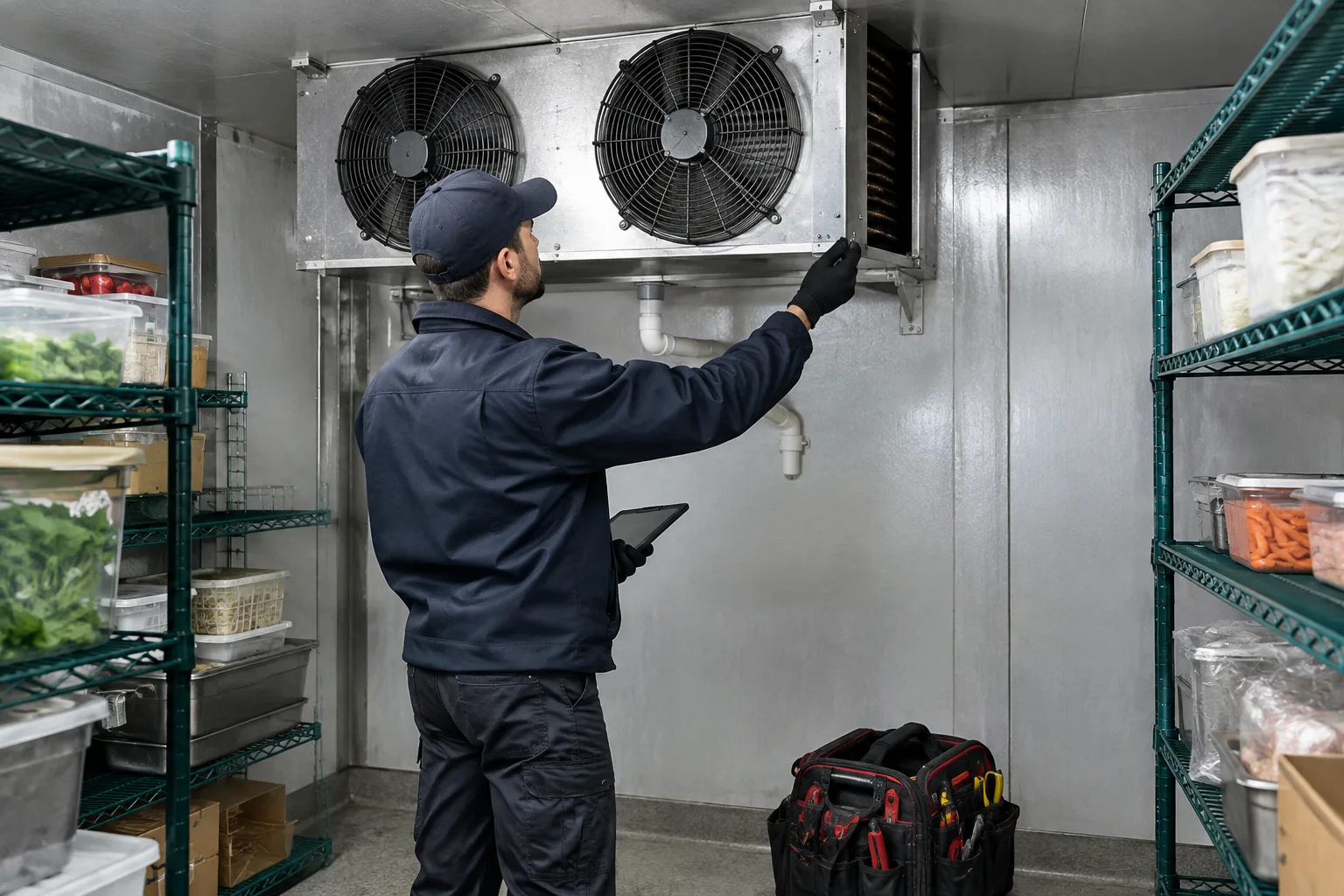
ASHRAE identifies walk-in coolers as commercial refrigeration equipment that relies on components such as the evaporator, condenser, airflow, doors, and gaskets to maintain proper operation. A refrigerant leak can disrupt that balance and make the system work harder than it should.
This article explains the warning signs of refrigerant loss, why those signs appear, and when it makes sense to schedule professional service. If you manage equipment in the San Francisco Bay Area or Greater Sacramento, Golden Gate Refrigeration services commercial refrigeration and walk-in cooler systems in those regions.
Spot Leak Warning Signs
Refrigerant loss does not always create a sudden shutdown. More often, operators notice gradual changes in temperature control, cycling, frost patterns, or run time. Those changes can point to a leak, but they can also overlap with airflow problems, dirty coils, failing controls, or door-seal issues.
Common signs that warrant closer attention include:
- The cooler takes longer than usual to pull down after restocking.
- Product temperature becomes less consistent from one day to the next.
- Ice or frost develops in unusual places on the evaporator or lines.
- The compressor seems to run more often or for longer periods.
- Technicians or staff notice unusual pressure or temperature readings during checks.
Because several faults can produce similar symptoms, the safest approach is to treat these clues as a reason for proper diagnosis rather than assuming the refrigerant charge is the only issue.
How Leaks Reduce Cooling
Refrigerant absorbs heat inside the evaporator and releases it outside at the condenser. When the charge is low, the system may not move enough refrigerant through the cycle to remove heat at the expected rate. The result is often slower cooling, unstable cabinet temperatures, and higher mechanical stress.
Low refrigerant can also affect operating pressures and evaporator temperature in ways that encourage icing or poor heat transfer. ENERGY STAR guidance on commercial refrigeration maintenance emphasizes measures such as coil cleaning, gasket care, and regular servicing because these factors help equipment run efficiently and maintain performance.
In practical terms, a leak can cause the cooler to spend more energy while delivering less cooling. That is why refrigerant loss should be evaluated promptly instead of being treated as a minor nuisance.
Common Leak Sources
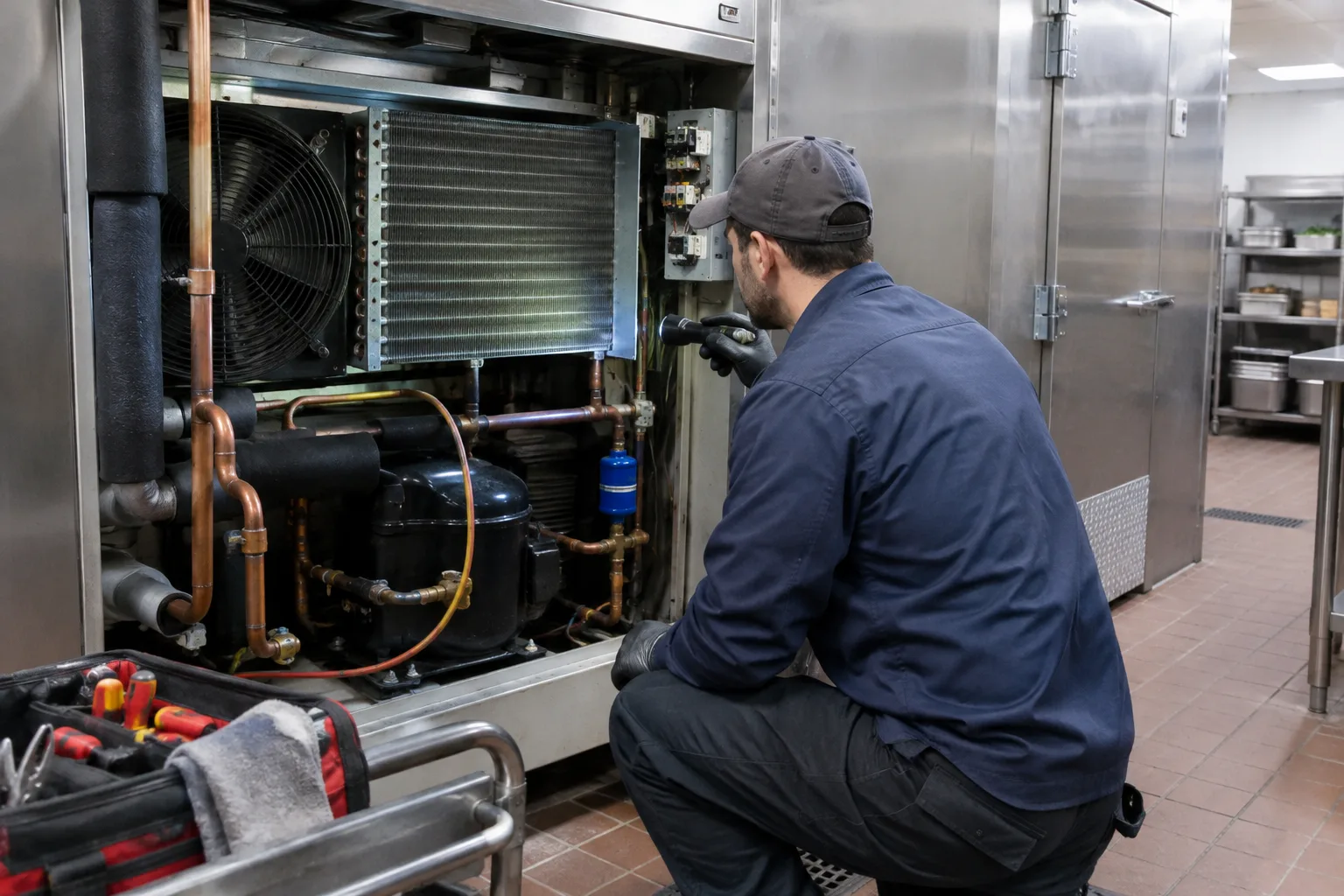
Refrigerant can escape from several points in a walk-in cooler system. A technician may inspect service ports, joints, fittings, coils, valves, and tubing because leaks can occur anywhere the system contains pressurized refrigerant.
Common leak locations include:
- Mechanical joints and brazed connections
- Service valves and access fittings
- Evaporator or condenser coil tubing
- Vibration points where piping may wear over time
- Corrosion-prone areas on older components
Visible oil residue near a connection or component can sometimes indicate a leak, but it is not proof by itself. Professional testing is still needed to confirm the source and determine the proper repair.
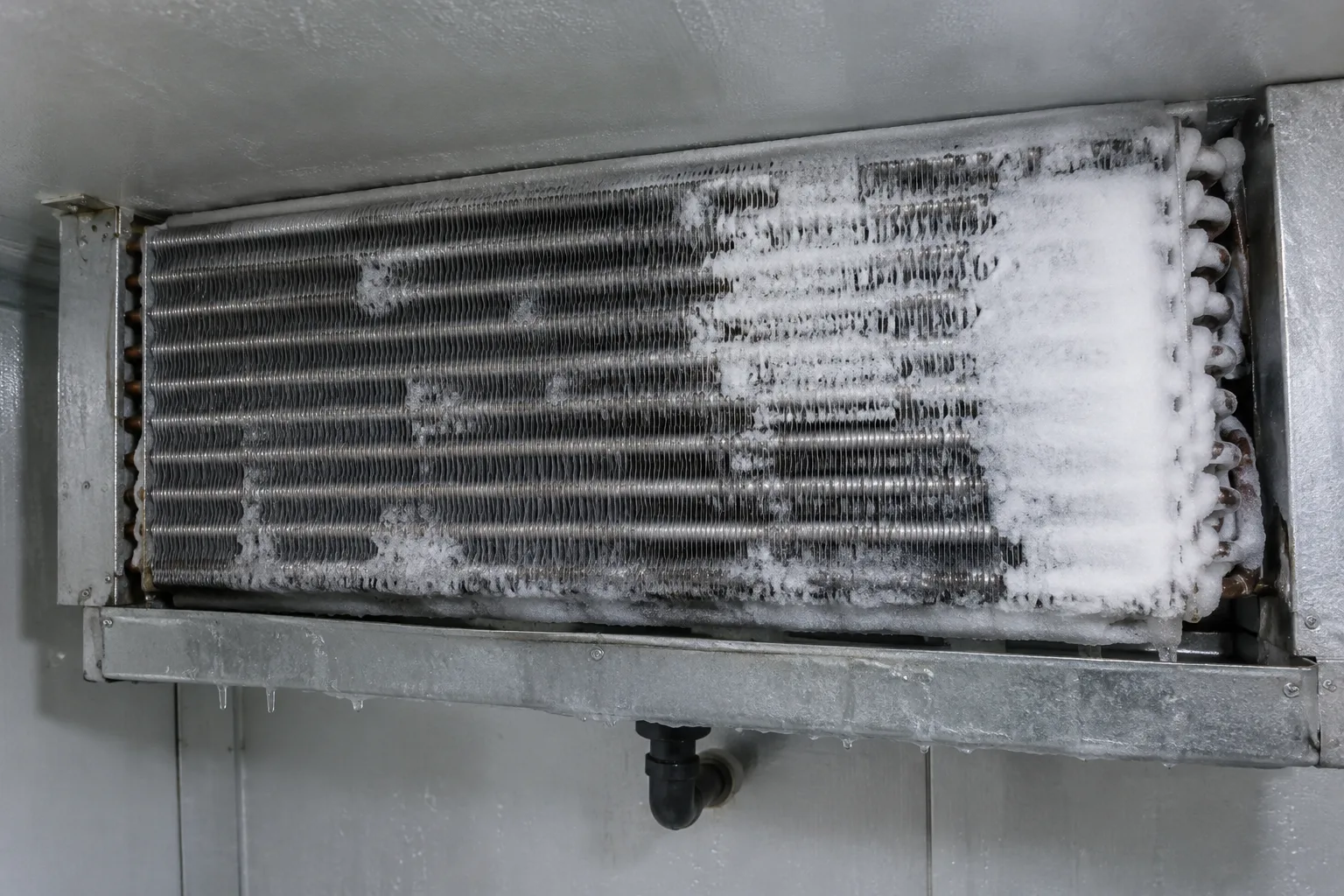
Signs of Refrigerant Loss
Several operating changes can suggest refrigerant loss in a commercial walk-in cooler. One of the most common is a cooler that no longer holds temperature as consistently as it once did, especially after normal door use or product loading.
Other signs may include:
- Extended cooling cycles or short cycling that does not correct the temperature problem
- Uneven frost or icing patterns on the evaporator
- Warm spots inside the box despite the system running
- Low suction or abnormal pressure readings during service checks
- Audible changes in compressor or refrigerant flow behavior
These symptoms do not always mean there is a refrigerant leak, but they do indicate that the system deserves inspection. Early diagnosis can help limit food-safety risk and reduce unnecessary strain on the equipment.
Operational and Compliance Risks
For food-service businesses, supermarkets, and other commercial operators, cooling problems can affect inventory, labor, and compliance obligations. A cooler that is not maintaining temperature as expected may force staff to move product, document temperatures more closely, or limit what can be stored until the problem is corrected.
Food safety guidance from Foodsafety.gov stresses keeping food properly cooled to reduce the risk of foodborne illness. When a walk-in cooler is underperforming, operators should treat the issue as a business and safety concern, not just a comfort problem.
Refrigerant loss can also increase energy use and make the system less predictable during high-demand periods. Prompt service helps reduce the chance that a manageable leak becomes a larger equipment failure.
What Technicians Check
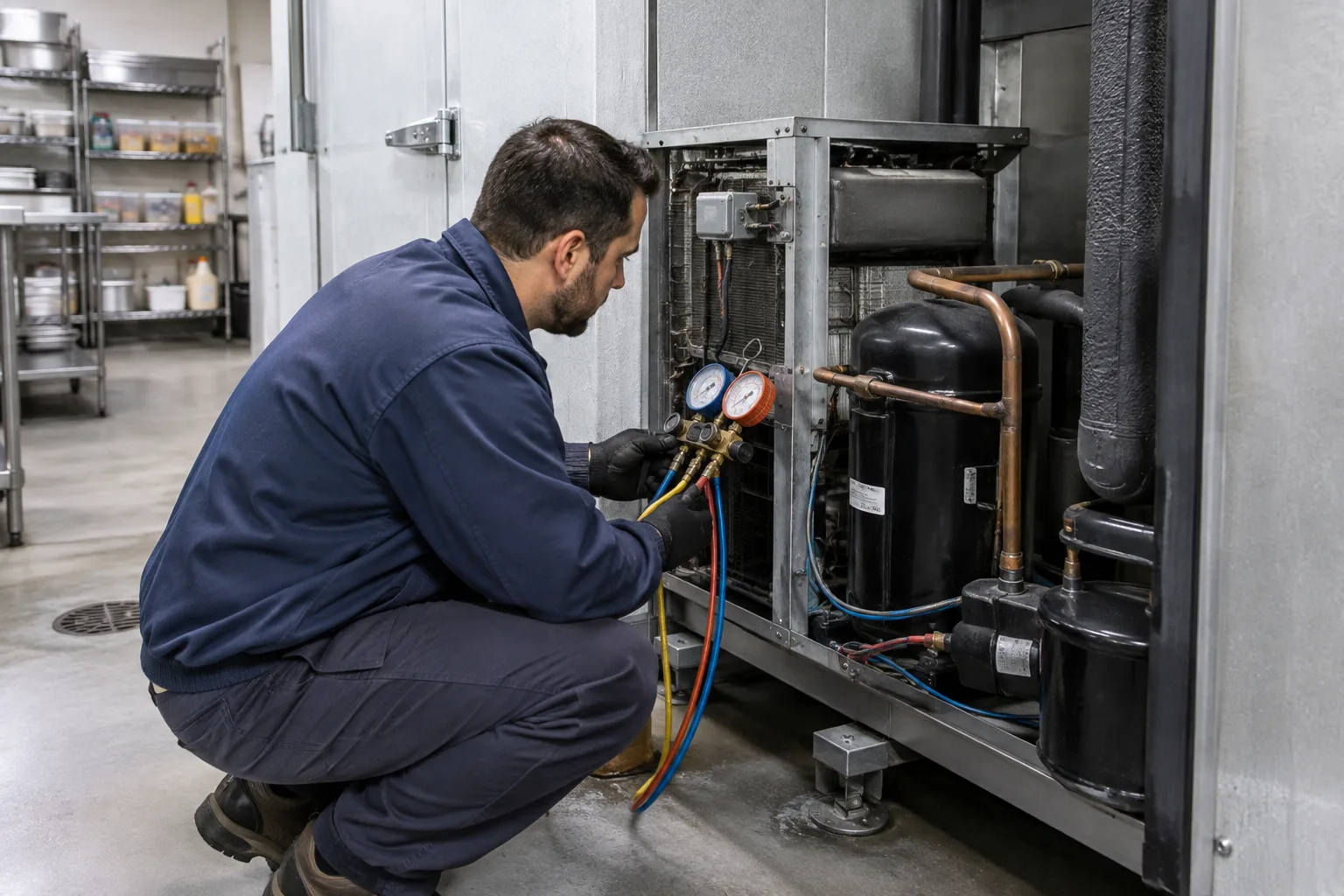
Professional leak diagnosis usually starts with a visual inspection, followed by pressure, temperature, and component checks. The goal is to determine whether the cooler is truly low on refrigerant, and if so, where the loss is occurring.
Typical diagnostic steps may include:
- Inspecting the system for oil stains, damaged tubing, or loose fittings
- Checking operating pressures and temperature readings
- Examining the evaporator, condenser, and service ports for signs of leakage
- Using appropriate leak-detection methods to pinpoint the source
- Verifying that airflow, defrost, and door-seal issues are not contributing to the symptom
That broader approach matters because a walk-in cooler can show refrigerant-like symptoms even when the root cause is something else. A careful diagnosis helps avoid unnecessary parts replacement or repeated service calls.
Leak Missteps to Avoid
One of the most common mistakes is topping off refrigerant without finding and fixing the source of the loss. That may restore cooling temporarily, but the underlying leak can continue and the problem may return.
Another misstep is assuming every temperature problem is caused by refrigerant loss. Dirty coils, airflow restrictions, door-seal wear, defrost issues, and control faults can produce similar symptoms, so a broader inspection is important.
Operators should also avoid repeated restarts or informal adjustments that make it harder to track what the system is doing. A documented service visit gives technicians a better chance to identify the cause and correct it properly.
Repair and Recovery Steps
Once a leak is confirmed, the repair process usually includes locating the source, correcting the damaged component or connection, and then restoring the system to proper operating conditions. The exact repair depends on whether the leak is at a fitting, coil, service valve, or other refrigerant circuit component.
After the repair, the technician typically verifies system performance with pressure and temperature checks and then confirms that the cooler is cooling normally again. That follow-up matters because a successful repair is not just about sealing the leak; it is also about restoring reliable operation.
For commercial operators, the goal is to get the equipment back to stable service without guessing at the cause or repeating the same repair cycle.
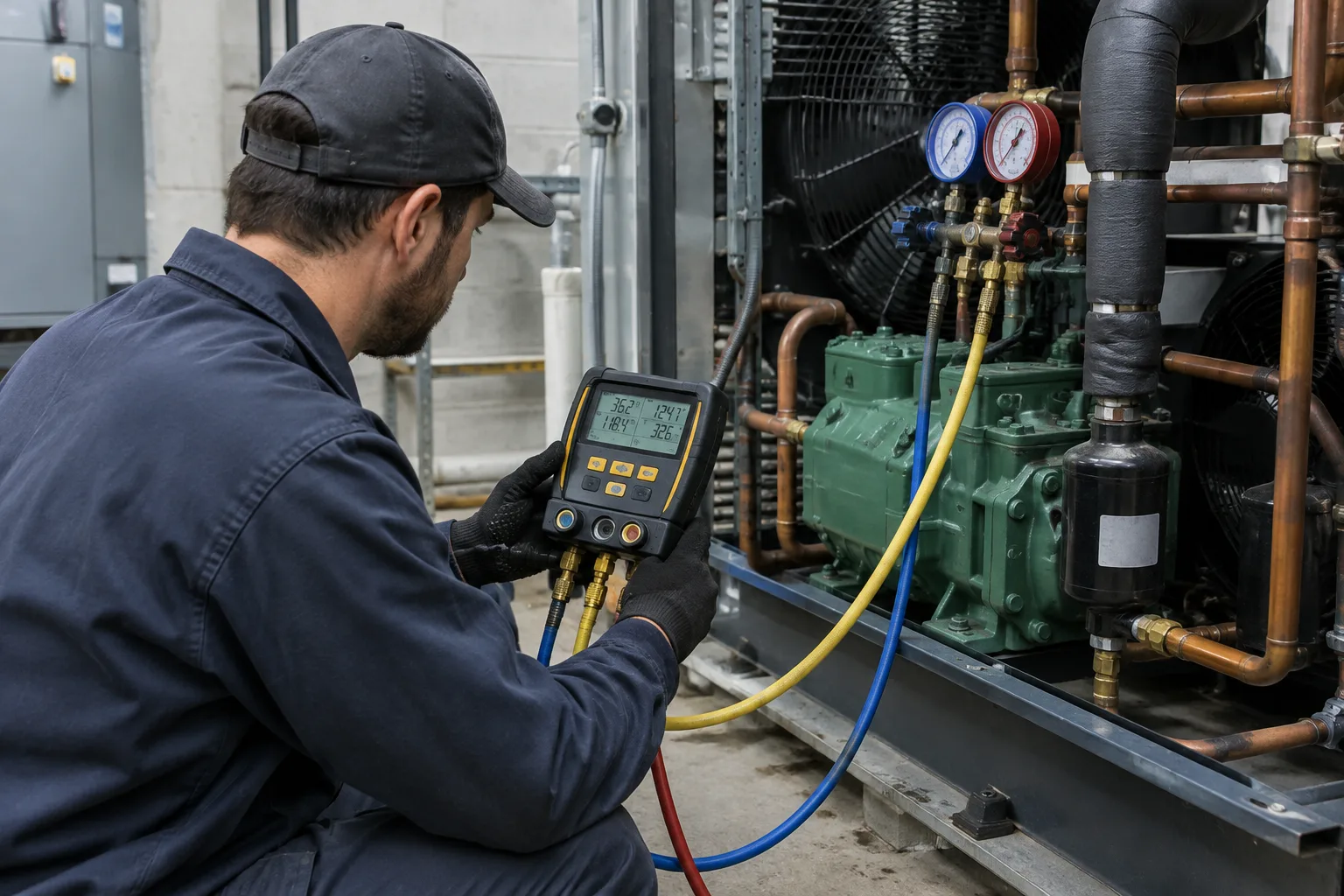
Confirm the Leak Stays Fixed
After service, the cooler should be monitored for stable temperature behavior, normal cycling, and expected frost patterns. If the system begins showing the same symptoms again, that can indicate an unresolved leak, an additional leak point, or another underlying refrigeration issue.
Keeping records of temperature checks and service notes can help managers spot patterns early. Regular maintenance also supports better performance, including coil cleaning and gasket inspection, which are commonly recognized refrigeration upkeep items in ENERGY STAR guidance.
Follow-up monitoring is especially useful in busy food-service settings where frequent door openings, product loading, and ambient heat can make early warning signs easy to miss.
When to Schedule Service
If your walk-in cooler is struggling to hold temperature, showing unexplained icing, or behaving differently after routine checks, it is time to have the system evaluated. Refrigerant loss is only one possible cause, but it is important enough that the equipment should not be left to drift.
Business owners and property managers in the San Francisco Bay Area and Greater Sacramento can contact Golden Gate Refrigeration to discuss commercial refrigeration concerns, including walk-in cooler repair and other related service needs. The company can be reached at (415) 823-9890 or by email at Info@goldengateref.com, and customers may also use the website service-request form to ask about availability.
Prompt diagnosis helps protect stored product, reduce unnecessary wear, and keep the refrigeration system operating as intended.
Safety boundary: Use this checklist for observation and recordkeeping only. Electrical testing, refrigerant work, control changes, and repairs should be completed by a qualified commercial refrigeration technician.
Leak Questions for Operators
How can I tell whether a walk-in cooler is losing refrigerant? Common clues include longer pull-down times, unstable temperature, unusual icing, and longer compressor run times. Because those symptoms can overlap with airflow or control problems, a technician should confirm the cause.
Is a refrigerant leak always an emergency? Not every leak creates an immediate shutdown, but it should be addressed promptly because low refrigerant can affect food safety, energy use, and equipment reliability.
Can maintenance prevent refrigerant loss? Routine maintenance cannot stop every leak, but it can help technicians spot worn components early. Coil cleaning, gasket checks, and regular inspections support better system performance and make troubleshooting easier when problems appear.
Protect Your Refrigeration System
A walk-in cooler that may be losing refrigerant deserves timely attention before the problem becomes larger and more disruptive. If you manage a commercial kitchen, market, or property in the San Francisco Bay Area or Greater Sacramento, call Golden Gate Refrigeration or submit the website service-request form to discuss your equipment and confirm availability.
Early diagnosis can help preserve temperature stability, limit unnecessary wear, and keep your refrigeration system on track.