Why a Walk-In Cooler Stops Holding Temperature
If a walk-in cooler is warming up, icing over, or cycling unevenly, the issue can affect food safety and daily operations. This guide explains common symptom patterns, likely causes, and safe first checks before you call for commercial refrigeration service.
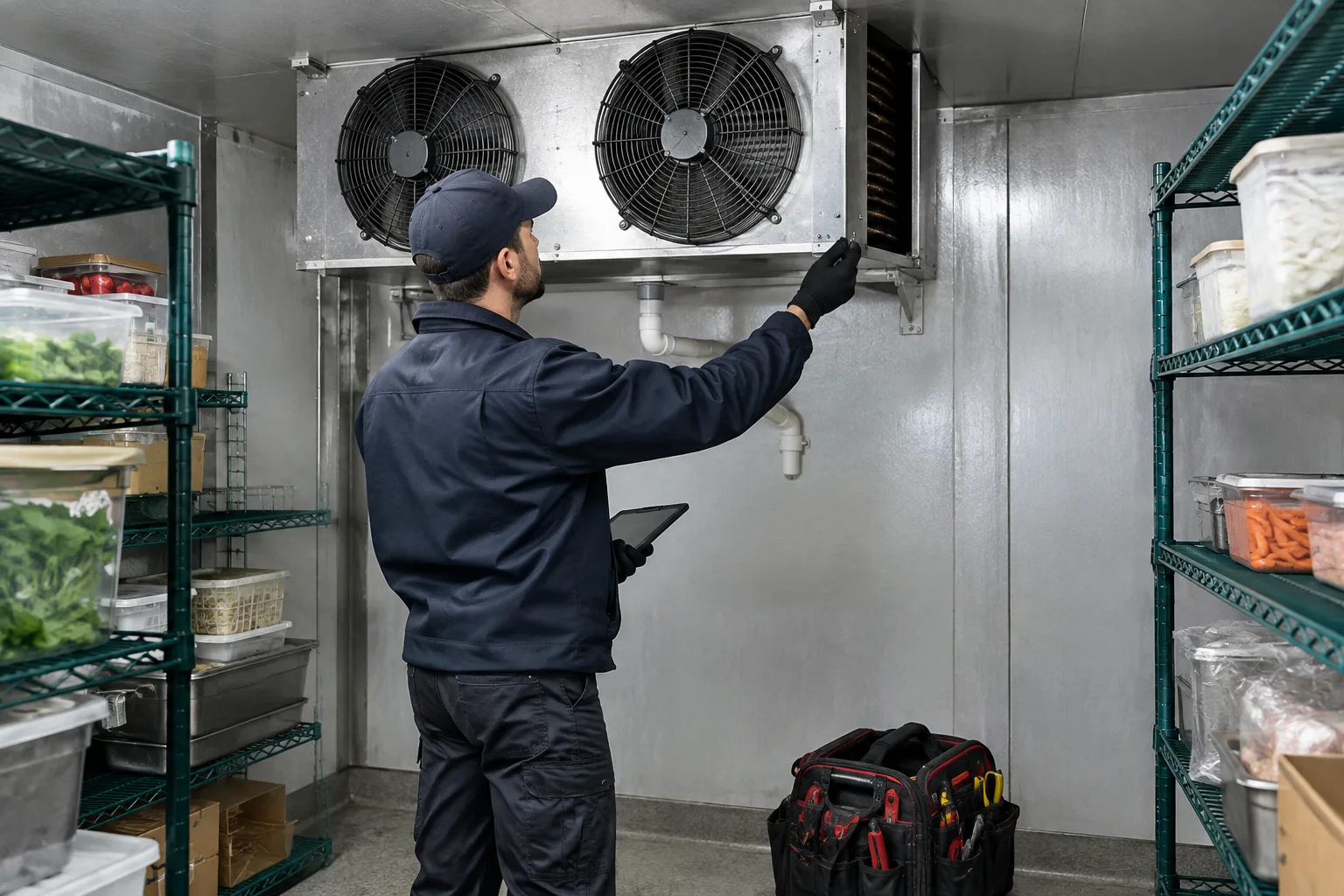
Why Temperature Loss Happens
A walk-in cooler not cooling the way it should can create immediate concern for restaurants, markets, and other food-service operations. Temperature drift does not always mean one single failure. It may point to airflow restrictions, door-seal problems, dirty condenser coils, control issues, or a refrigeration component that is no longer operating as intended.
ASHRAE notes that walk-in coolers depend on proper airflow, clean components, and intact gaskets to maintain performance. ENERGY STAR also recommends regular checks of coils, gaskets, and related maintenance items as part of commercial refrigeration upkeep. Those basics matter because small problems can turn into larger temperature swings if they are not addressed early.
Check the Symptoms First
Before you assume the system has completely failed, look at the symptoms you can observe safely. Is the cooler running but not reaching set temperature? Is it short cycling? Is frost building on the evaporator area? Is the product warm near the door while the back of the box feels colder?
These clues help narrow the problem. A cooler that is running continuously but still warming may have a heat-transfer or airflow issue. A unit that cycles on and off too often may have control, sensor, or compressor-related concerns. Uneven temperatures inside the box often point to circulation or door-seal issues rather than a single isolated fault.
Cooling Failure Patterns
Commercial walk-in cooler problems often show up in a few repeat patterns. The box may hold temperature during lighter use but struggle when the door opens frequently. It may cool for part of the day and then drift upward. It may also build ice while still failing to cool evenly.
Those patterns matter because they suggest where to begin looking. For example, a cooling system that loses performance only during busy periods may be affected by usage, airflow, or door habits. A system that slowly warms over time may be dealing with coil contamination, refrigerant-related issues, or components that are wearing out.
Likely Causes Behind Drift
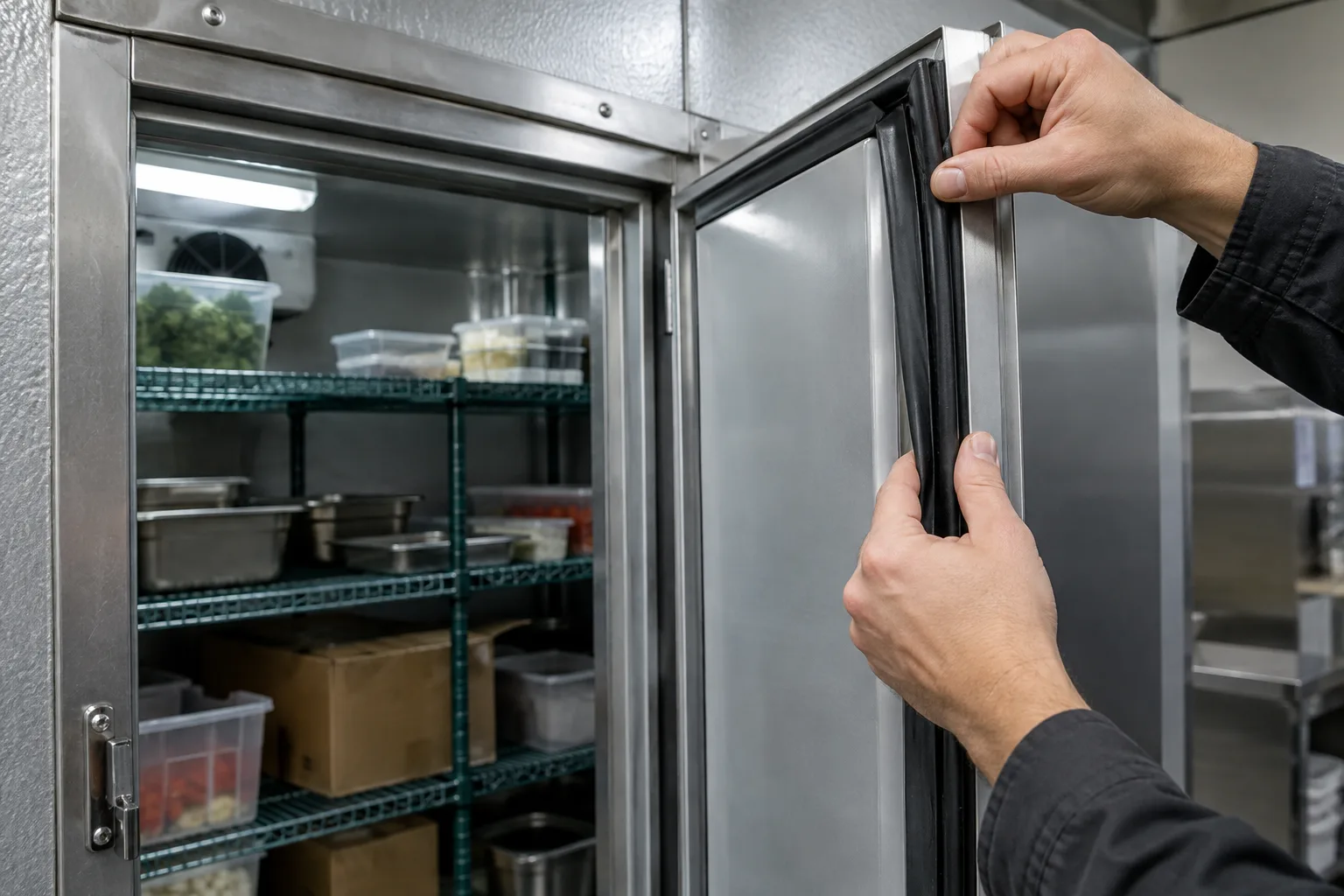
Several mechanical and operational issues can reduce cooling performance. Dirty condenser coils can limit heat rejection. Damaged or loose gaskets can allow warm air to enter the box. Blocked evaporator airflow can reduce the system’s ability to distribute cold air evenly. Sensor or control problems can cause the unit to respond at the wrong time.
ASHRAE guidance on food-service refrigeration highlights the role of airflow, condenser condition, and gasket integrity in reliable operation. In practice, that means a walk-in cooler may look fine on the outside while still losing performance because a small maintenance issue is affecting the whole system.
What You May Notice
Operators often notice one or more of these warning signs before a full service call:
- Temperature readings that rise above normal and do not recover quickly
- Frost or ice buildup on coils, walls, or around the evaporator area
- Warm spots near the door, floor, or shelves closest to the opening
- Short cycling, nonstop running, or unusual changes in run time
- Condensation or moisture where the cooler had previously stayed dry
FoodSafety.gov advises keeping cold food at safe temperatures to reduce foodborne illness risk. For a commercial cooler, that makes these symptoms more than a comfort issue; they are operational warning signs that deserve attention.
Risks to Product and Service
When a walk-in cooler cannot hold temperature, the impact can spread quickly through daily operations. Inventory may need to be moved, prep schedules may change, and staff may spend more time checking product conditions. If the issue continues, the business may face avoidable spoilage or service disruption.
For restaurants, supermarkets, and other commercial properties, the practical concern is consistency. Even when the cooler is still running, unstable temperatures can interfere with storage plans and create uncertainty about whether the system is protecting product the way it should.
Safe Checks to Try
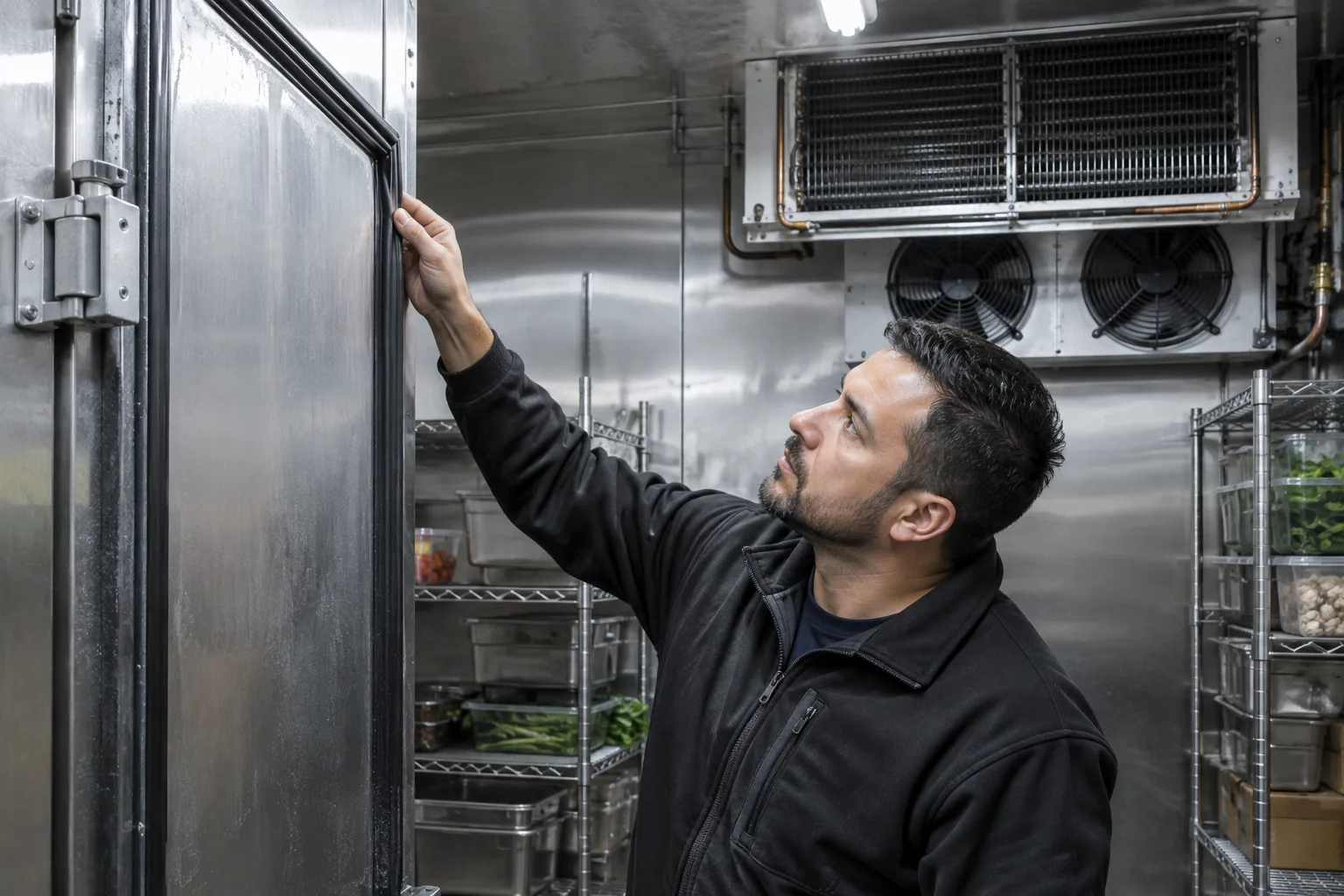
There are a few basic observations that can help before you request commercial refrigeration service. Confirm the door closes fully and that nothing is blocking the seal. Look for visible ice accumulation, unusual noise, or warm air leaking around the frame. Check whether the cooler is being opened more often than usual, especially during busy service periods.
It is also useful to compare the current room and box conditions with your normal operating pattern. If the problem appeared after a recent cleaning, stocking change, or door-seal issue, that context can help a technician narrow the likely cause. Avoid opening panels or resetting controls repeatedly unless your procedures specifically allow it.
Errors That Hide the Issue
When a cooler starts drifting, it is easy to make the problem harder to diagnose. Repeatedly opening the door, stacking product too tightly against interior air paths, or resetting controls without noting what changed can mask the pattern. Those actions may make it harder to tell whether the issue is airflow, a seal problem, a control issue, or something else in the refrigeration system.
It is also a mistake to assume that visible frost always means the same cause. Ice can point to airflow restriction, door leaks, or other conditions that deserve a closer look. Careful observation usually helps more than guesswork.
Next Repair Steps
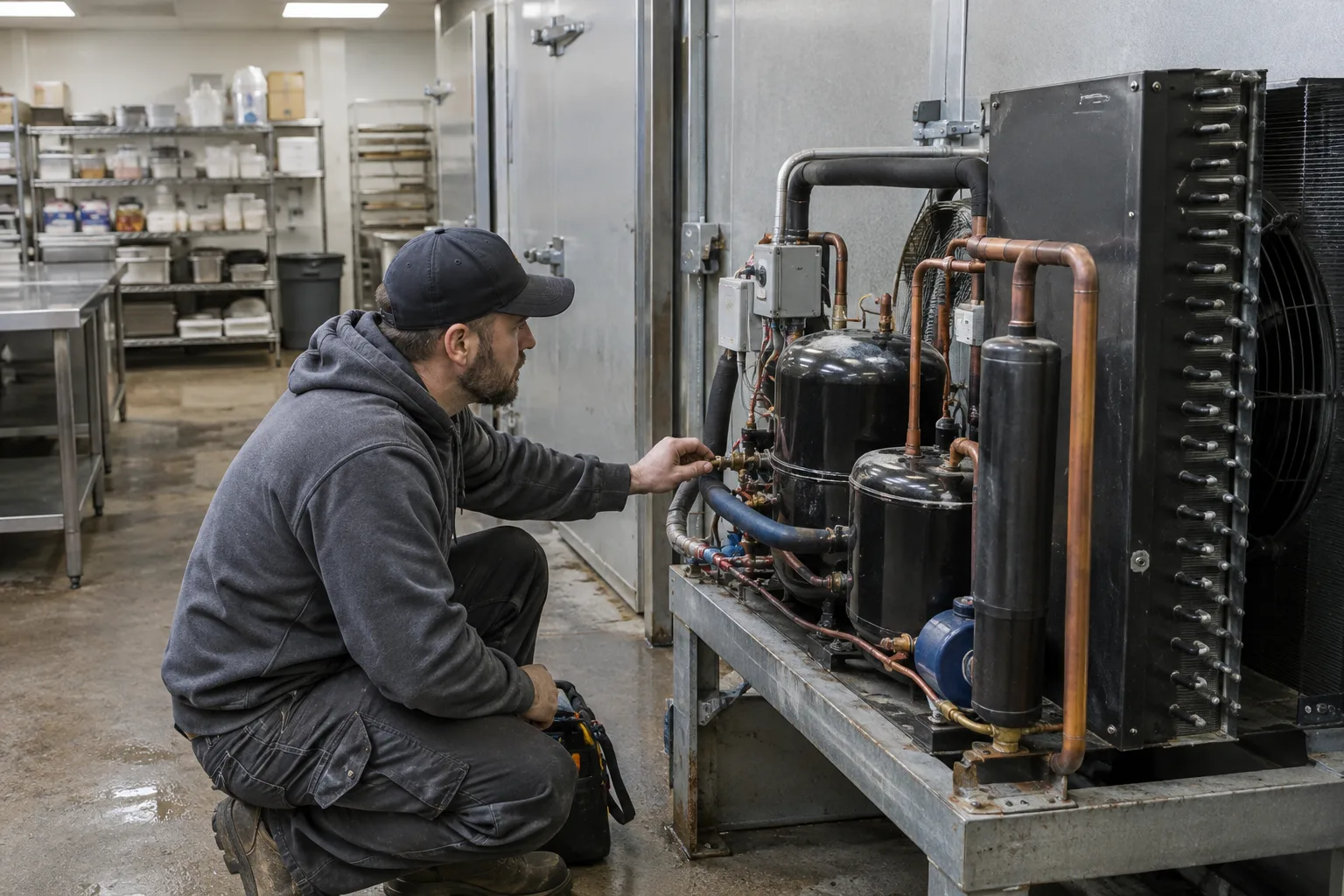
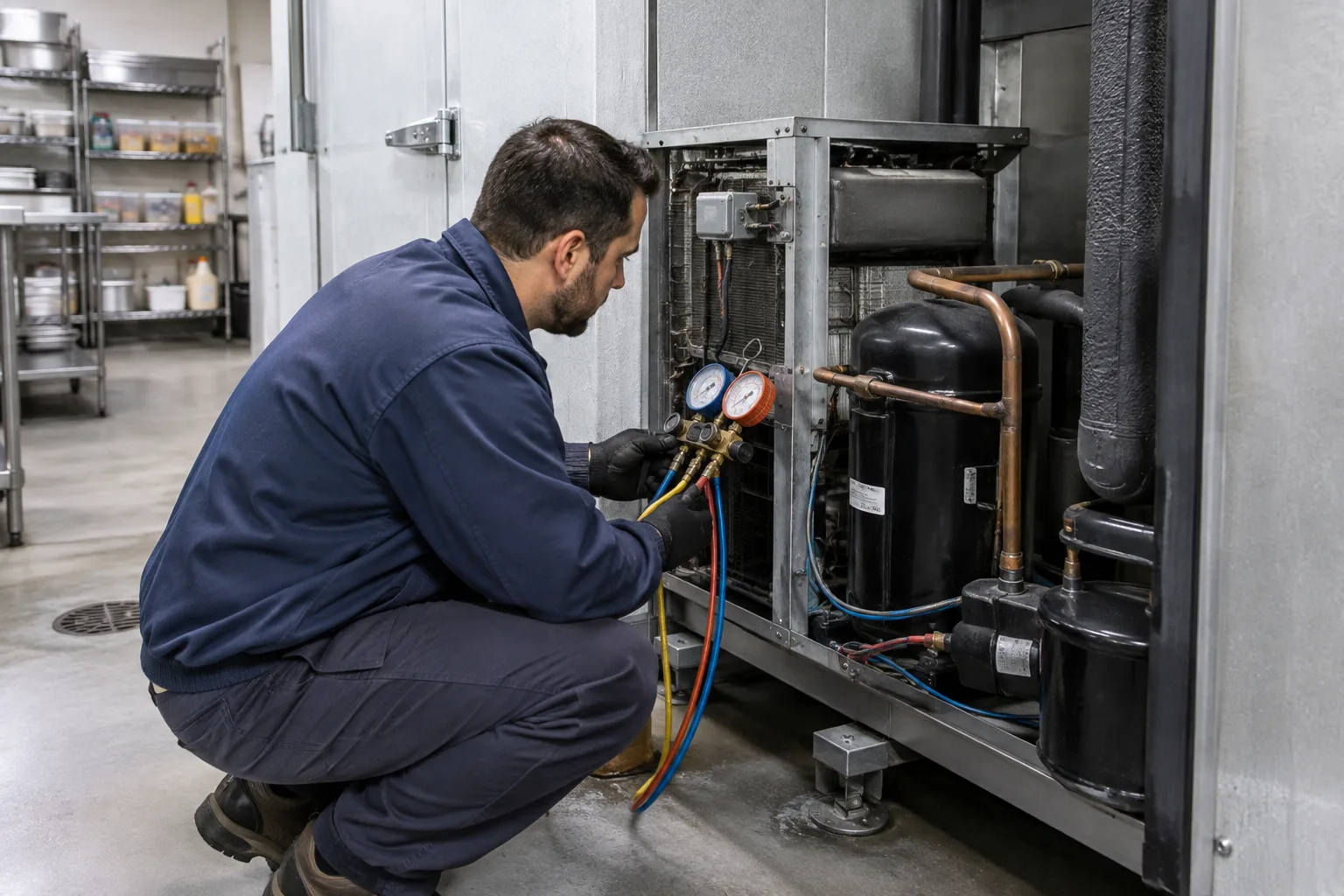
Most walk-in cooler repairs begin with confirming the source of the temperature loss. A technician may inspect door gaskets, hinges, condenser condition, evaporator airflow, controls, and related components to find where performance is breaking down. Depending on the findings, the repair may involve cleaning, adjustment, component replacement, or another targeted corrective step.
For commercial operations, the goal is not only to restore cooling, but to restore stable operation. That is especially important for restaurants, food-service businesses, supermarkets, and other facilities that depend on consistent cold storage throughout the day.
Watch Recovery Closely
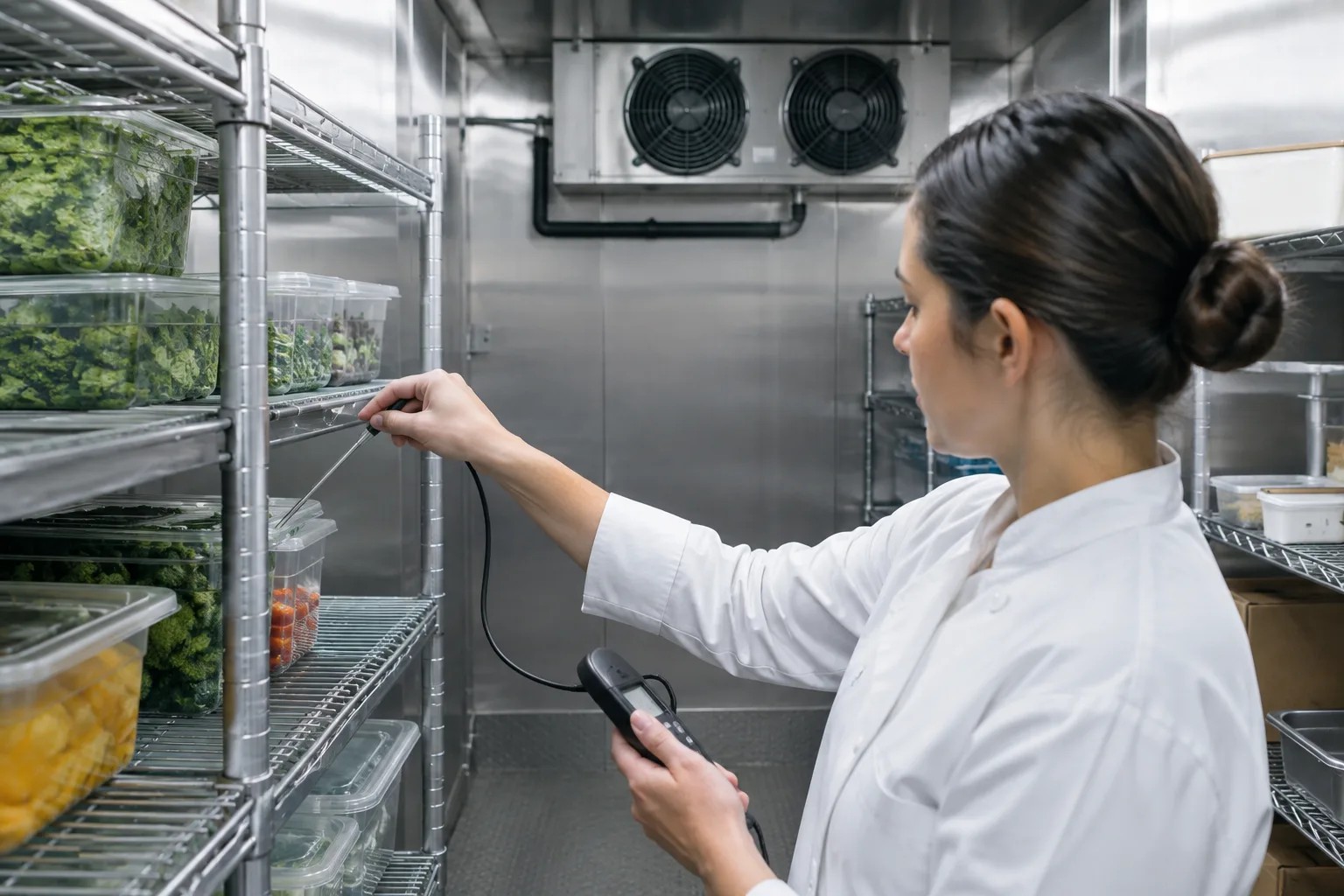
After service, continue to monitor the box rather than assuming the issue is finished. Check whether the temperature returns to normal and stays there through regular use. Watch for recurring frost, unusual cycling, or warm spots near the door and other high-traffic areas.
ASHRAE and ENERGY STAR both emphasize the value of maintenance and routine checks in commercial refrigeration. In practical terms, that means temperature recovery should be confirmed over time, not just at the moment the system is restarted.
Signs You Need Help Now
Request professional refrigeration service if the cooler keeps warming, if ice buildup keeps returning, if the compressor or controls appear to be cycling abnormally, or if product safety is in doubt. A persistent temperature problem should be treated as a business issue, not just a mechanical annoyance.
Golden Gate Refrigeration serves the San Francisco Bay Area and Greater Sacramento for commercial refrigeration repair, emergency refrigeration repair, walk-in cooler repair, walk-in freezer repair, and commercial HVAC. To discuss your equipment and confirm availability, call (415) 823-9890 or email Info@goldengateref.com. You can also use the website service-request form through the company site.
Safety boundary: Use this checklist for observation and recordkeeping only. Electrical testing, refrigerant work, control changes, and repairs should be completed by a qualified commercial refrigeration technician.
Troubleshooting Questions Answered
See the FAQs below for quick answers to common questions about a walk-in cooler that is not holding temperature.
Why does a walk-in cooler run but still warm up? A cooler can still run while losing performance if airflow is restricted, gaskets are damaged, coils are dirty, controls are not responding properly, or another refrigeration component is not operating as intended.
Is frost on a walk-in cooler always a sign of a major failure? Not always. Frost can point to airflow, door-seal, or maintenance issues. It should be observed carefully because repeated icing can also signal a more serious refrigeration problem.
When should I call for service instead of troubleshooting longer? Call for professional service if temperatures keep rising, ice keeps returning, or product safety is in doubt. A persistent cooling problem can affect operations and should be evaluated promptly.
Request Fast Diagnosis
If your walk-in cooler is still losing temperature, do not wait for the problem to sort itself out. Call Golden Gate Refrigeration or submit the website service-request form to discuss the symptoms, review the equipment, and confirm availability for commercial refrigeration service.