Commercial Walk-In Cooler Repair Guide
A practical guide to commercial walk-in cooler repair for restaurants, supermarkets, and other commercial properties. Learn common warning signs, likely causes, and safe next steps before service.
Repair Basics for Busy Operators
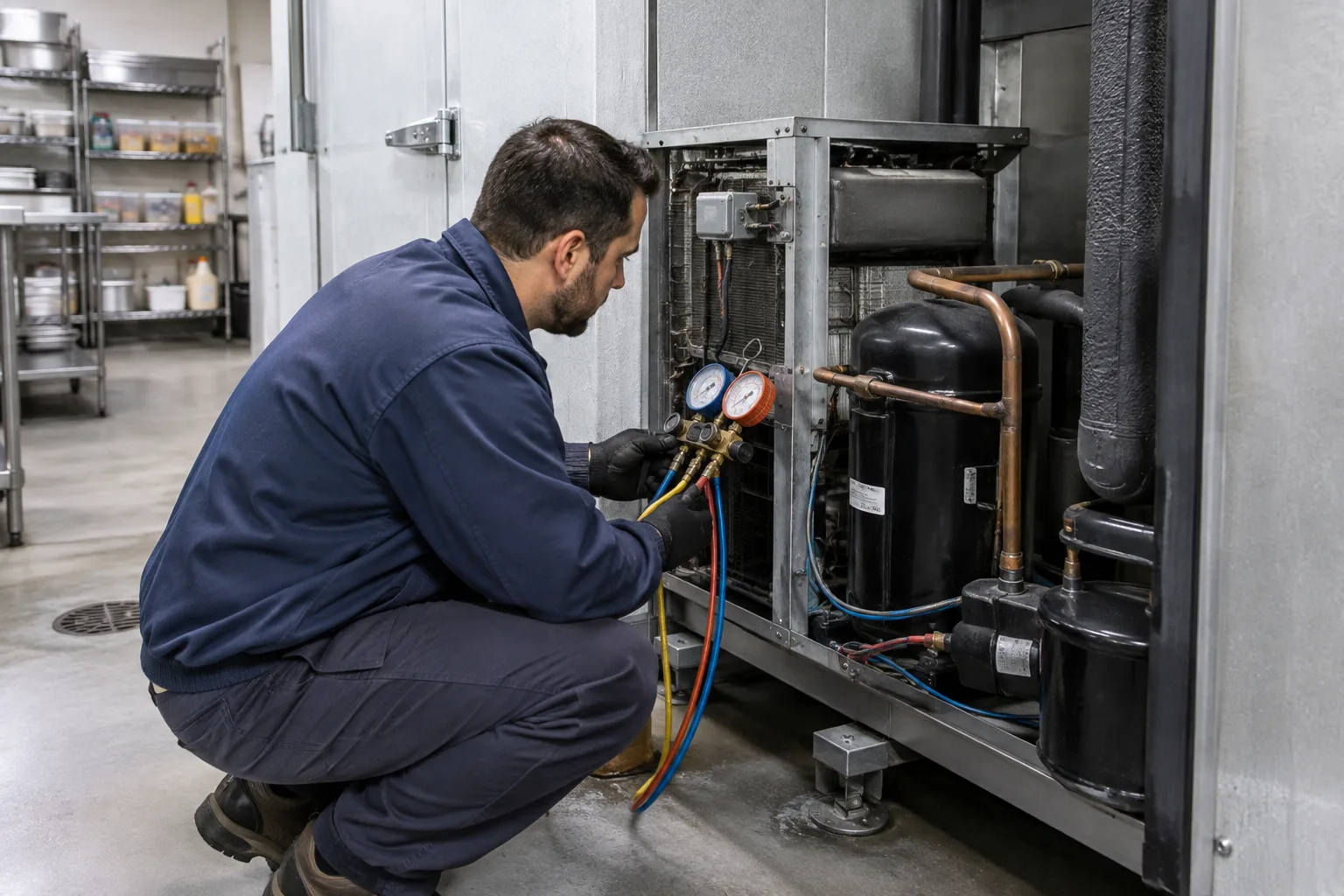
Commercial walk-in cooler repair is about protecting temperature-sensitive inventory, reducing downtime, and restoring reliable operation before a small issue becomes a larger one. For restaurants, food-service businesses, supermarkets, and other commercial properties, a cooler that is not holding temperature can affect product quality, labor planning, and day-to-day operations.
Walk-in coolers are complex systems. Performance can be affected by doors, gaskets, airflow, evaporator coils, condensers, controls, and the surrounding space. ASHRAE identifies walk-in coolers as commercial refrigeration equipment that depends on proper maintenance and balanced operation to function as intended.
This guide explains common failure signs, likely causes, and practical checks operators can make before scheduling service with Golden Gate Refrigeration. If your cooler is showing symptoms of trouble, it is best to discuss the equipment and confirm availability by phone or through the website service-request form.
Spot Trouble Fast
Some walk-in cooler problems are obvious, while others start as subtle temperature drift or heavier-than-normal equipment strain. Early warning signs often appear before a full breakdown, which is why routine observation matters.
Common signs that a cooler may need commercial walk-in cooler repair include:
- Temperature running higher or lower than expected
- Ice buildup on evaporator components or around the box
- Condensation, standing water, or repeated drain issues
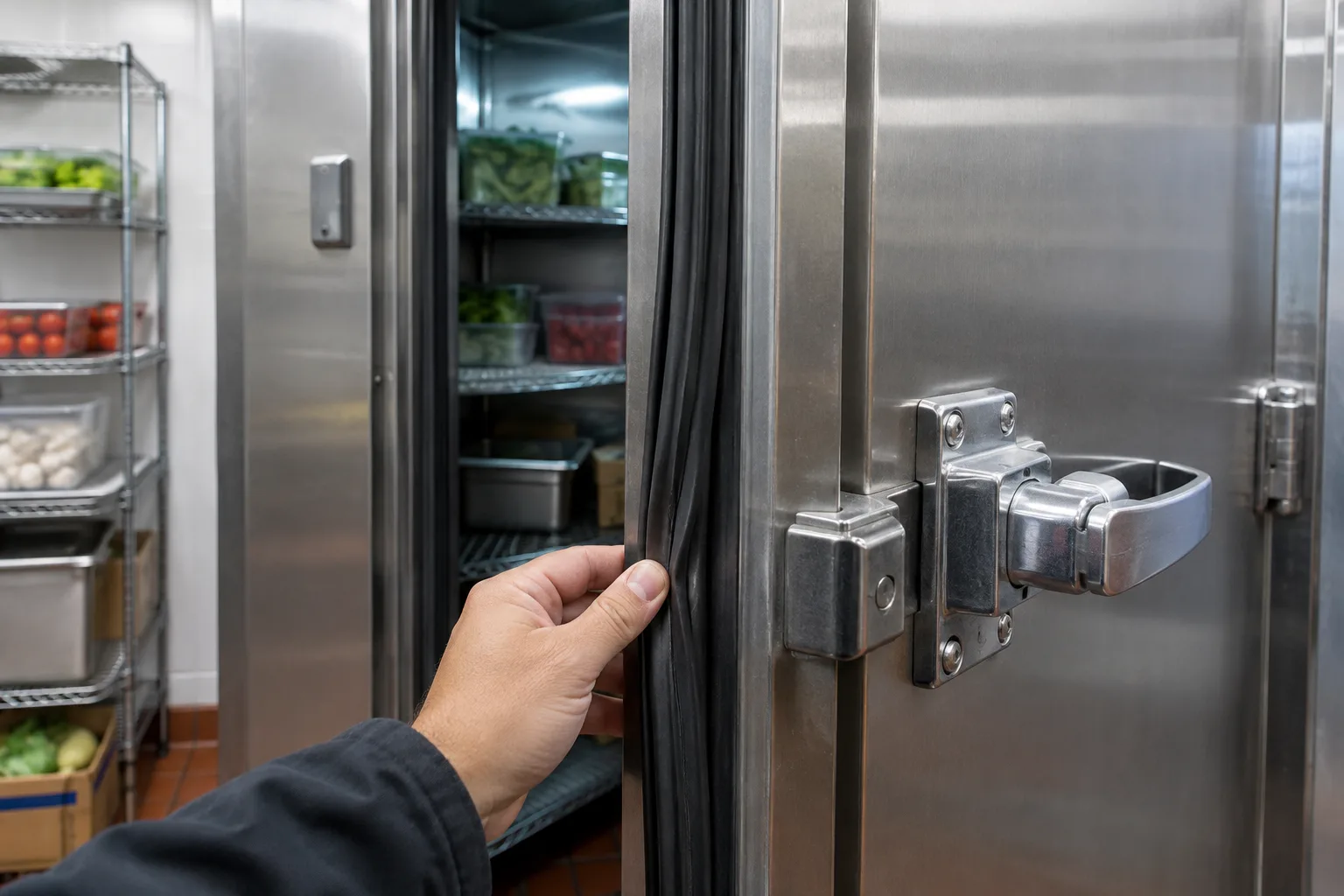
- Doors that do not close tightly or seals that look worn
- Unusual noises from fans, compressors, or moving parts
- Longer run times or equipment that cycles more often than usual
These symptoms do not identify the exact cause on their own, but they do indicate that the system deserves prompt attention.
What Usually Fails
A walk-in cooler depends on several interconnected parts. When one part is affected, the rest of the system may have to work harder to maintain the target temperature. That added strain can show up as inconsistent cooling, icing, or rising energy use.
Common areas involved in walk-in cooler service include:
- Door gaskets, hinges, and closers
- Evaporator and condenser coils
- Fans and motors
- Thermostats, sensors, and controls
- Drain lines and condensate management
- Refrigerant circuit components
ASHRAE and ENERGY STAR both emphasize maintenance practices such as cleaning coils, checking gaskets, and keeping equipment in proper operating condition because these tasks help support efficient and stable performance.
Why Coolers Break Down
Many cooler failures begin with conditions that reduce heat transfer or disrupt airflow. A dirty condenser coil, restricted evaporator coil, or damaged door gasket can all make it harder for the system to remove heat from the box. Over time, that can lead to longer run times and uneven temperatures.
Other common causes include:
- Warm air infiltration through a poorly sealed door
- Blocked airflow from product placement or ice buildup
- Electrical or control issues that affect compressor or fan operation
- Drain problems that contribute to water accumulation and icing
- Refrigerant or mechanical issues that require professional diagnosis
In commercial refrigeration, symptoms often overlap. A cooler that is warming up may have more than one contributing issue, which is why a careful inspection is usually needed before repair decisions are made.
Warning Signs to Watch
Operators often notice walk-in cooler trouble in the way the equipment behaves during a normal shift. Watching for changes early can help prevent food safety risks and reduce unnecessary stress on the system.
Pay attention to these measurable or visible signs:
- Product temperature drifting outside the normal range for your operation
- Visible frost or ice where it should not be present
- Water on the floor near the cooler or at the drain
- Doors that rebound, stick, or fail to seal smoothly
- Hot spots inside the box or uneven cooling from one area to another
- Motors, fans, or compressors that sound different than usual
The U.S. Food & Drug Administration and other food-safety guidance consistently stress keeping potentially hazardous food at safe temperatures. If your cooler is not performing normally, it should be checked promptly.
Costs of Delayed Repair
When a cooler loses performance, the impact is not limited to the equipment itself. Delayed repair can affect inventory, preparation schedules, and the ability to serve customers with confidence. It can also increase wear on other refrigeration components as the system struggles to compensate.
For business owners and property managers, the practical concerns often include:
- Inventory spoilage or shortened product life
- Extra labor for product checks, transfers, or emergency adjustments
- Disruption to kitchen or receiving operations
- Higher strain on refrigeration equipment during ongoing faults
- Potential compliance concerns tied to food storage conditions
For that reason, walk-in cooler repair is usually more effective when it starts with prompt diagnosis rather than waiting for a complete shutdown.
Simple Checks Before Service
There are a few safe checks operators can make before calling for service. These steps do not replace professional diagnosis, but they can help you describe the problem more clearly and avoid unnecessary delay.
Before requesting commercial refrigeration repair, consider the following:
- Confirm the temperature reading and compare it with your normal operating range.
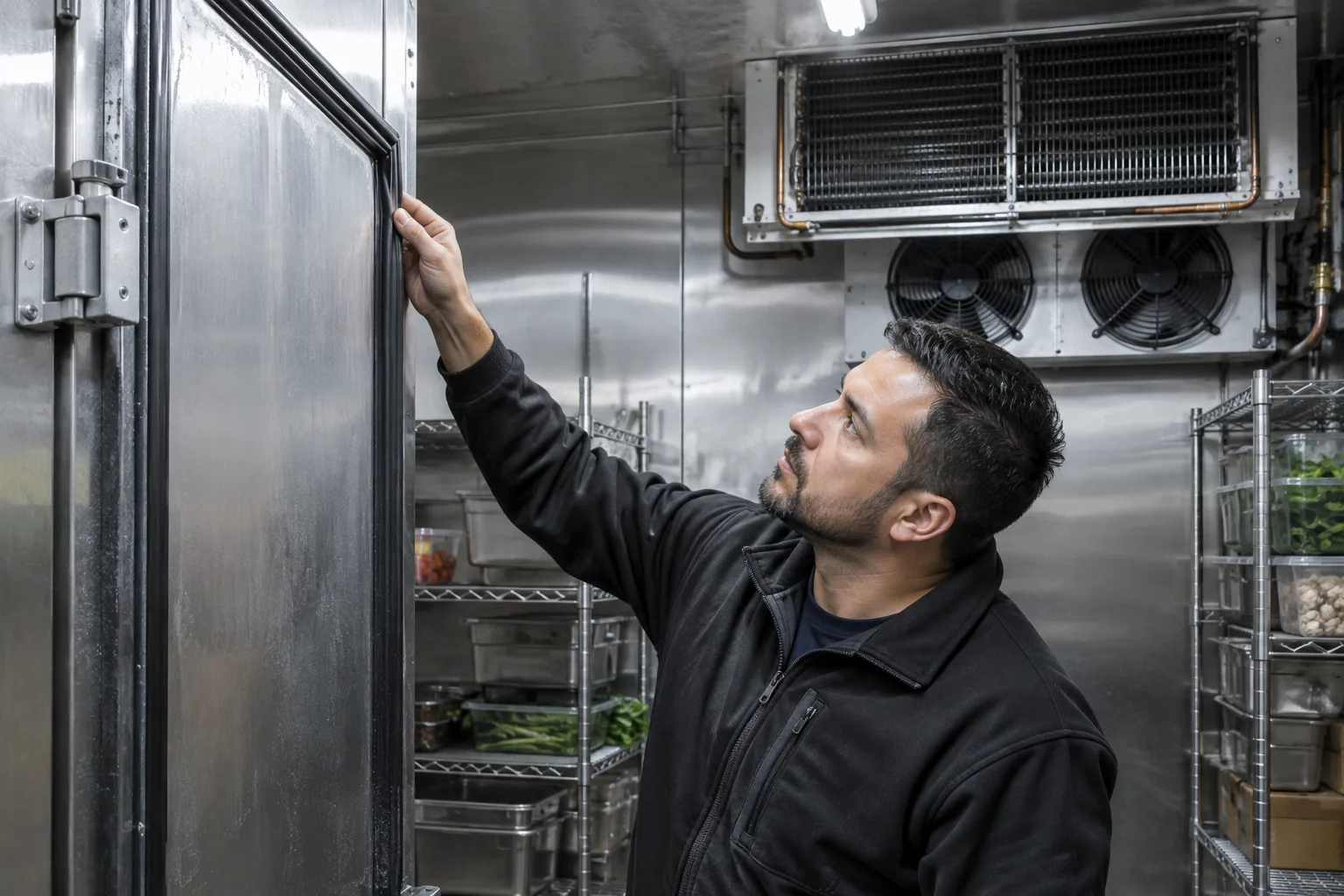
- Check that doors close fully and that nothing is blocking the seal.
- Look for obvious ice buildup, standing water, or heavy condensation.
- Make sure product is not stacked in a way that blocks airflow.
- Note any unusual sounds, smells, or changes in cycling behavior.
If the cooler is losing temperature quickly, do not assume a simple reset will solve the problem. A qualified technician should evaluate the system and determine the next step.
Mistakes That Worsen Problems
Well-intended troubleshooting can sometimes make a walk-in cooler problem harder to diagnose or more expensive to fix. The goal is to protect the product, avoid adding strain to the system, and leave technical repairs to qualified refrigeration service.
Common mistakes include:
- Resetting controls repeatedly without checking for the underlying cause
- Leaving doors open longer than necessary during busy periods
- Stacking product against evaporator areas and blocking airflow
- Chiping away at ice or frost in a way that can damage components
- Ignoring a worn gasket, broken latch, or misaligned door
ENERGY STAR guidance on commercial refrigeration maintenance supports regular attention to coils, gaskets, and operating conditions because small issues can affect both performance and efficiency. If the cooler is already showing temperature problems, avoid temporary workarounds that conceal the real issue.
Repair Options and Priorities
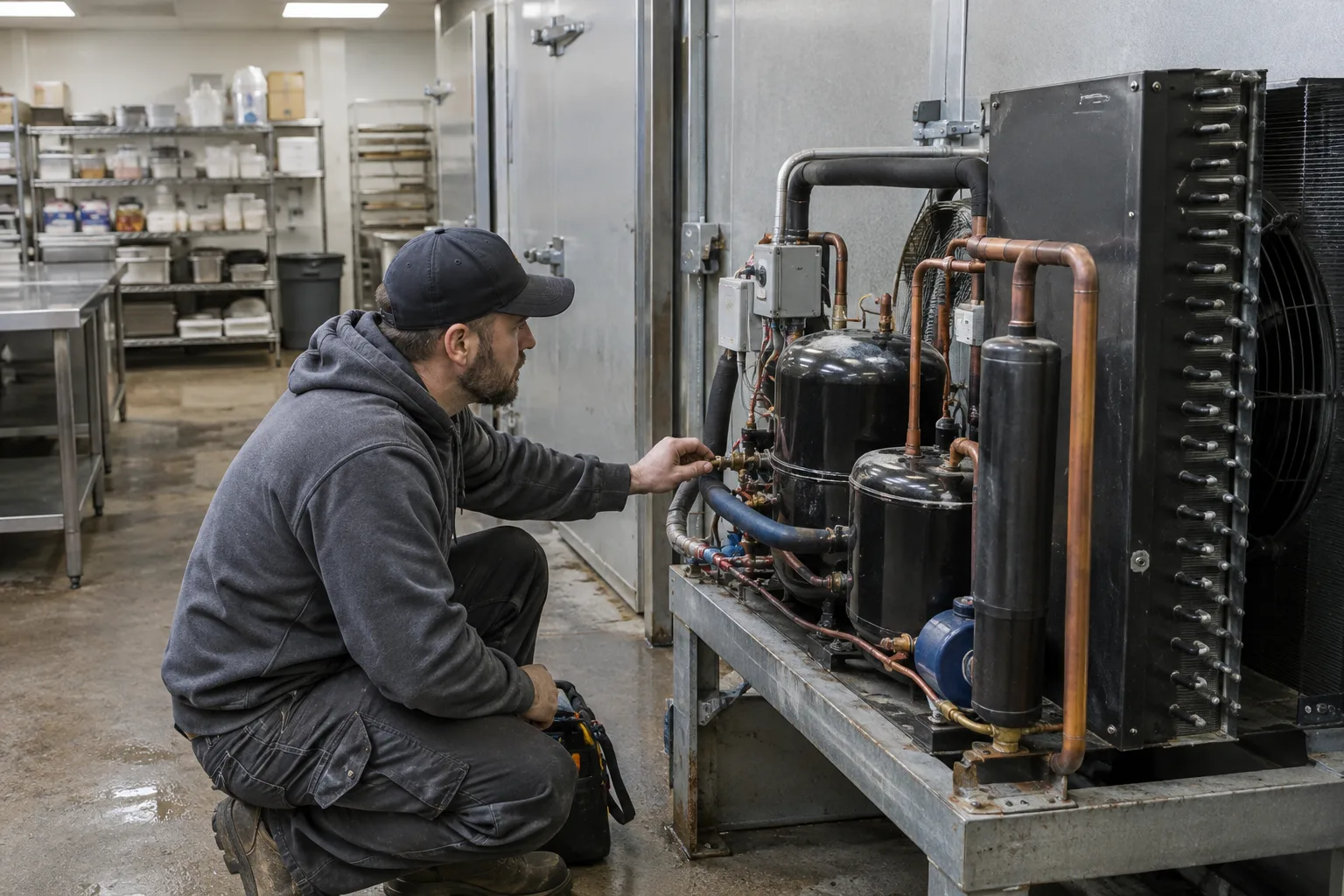
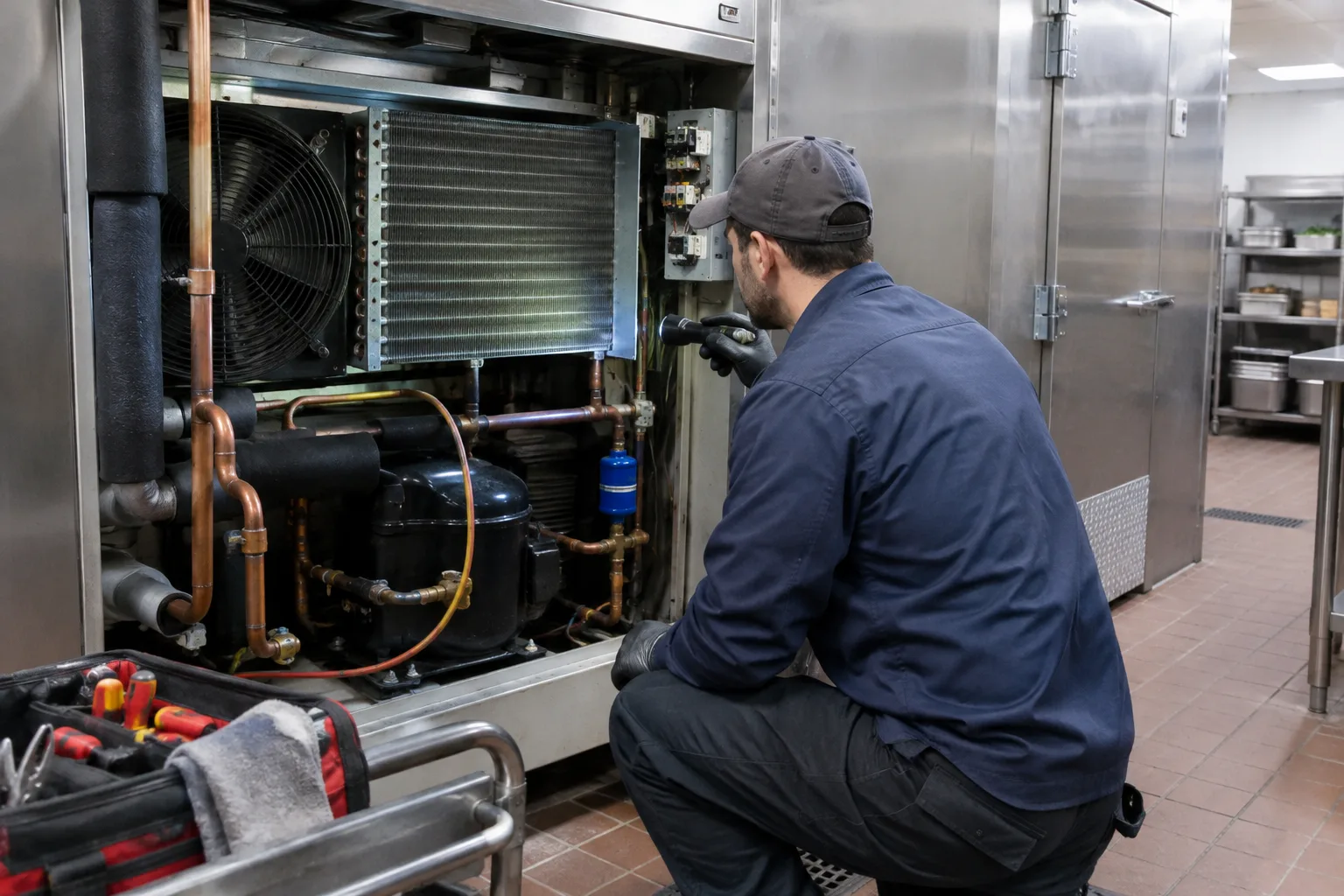
Professional walk-in cooler repair usually starts with a focused inspection of the parts most likely to affect temperature control. A technician may evaluate the door seals and hardware, check airflow and coil condition, look for drainage issues, review controls and sensors, and test the refrigeration circuit as needed.
Depending on the findings, service may involve cleaning, adjustments, component replacement, or more detailed refrigeration work. ASHRAE notes that proper airflow, clean coils, and good gasket condition are important to stable walk-in cooler operation, so those items are often part of the repair discussion.
In some cases, the best solution is repair. In others, recurring failures or major wear may point to a larger equipment decision. The right choice depends on the system’s condition, the pattern of the problem, and how the cooler fits into daily operations. If you need help sorting through those options, contact Golden Gate Refrigeration to discuss the equipment and confirm availability.
Track Performance After Repair
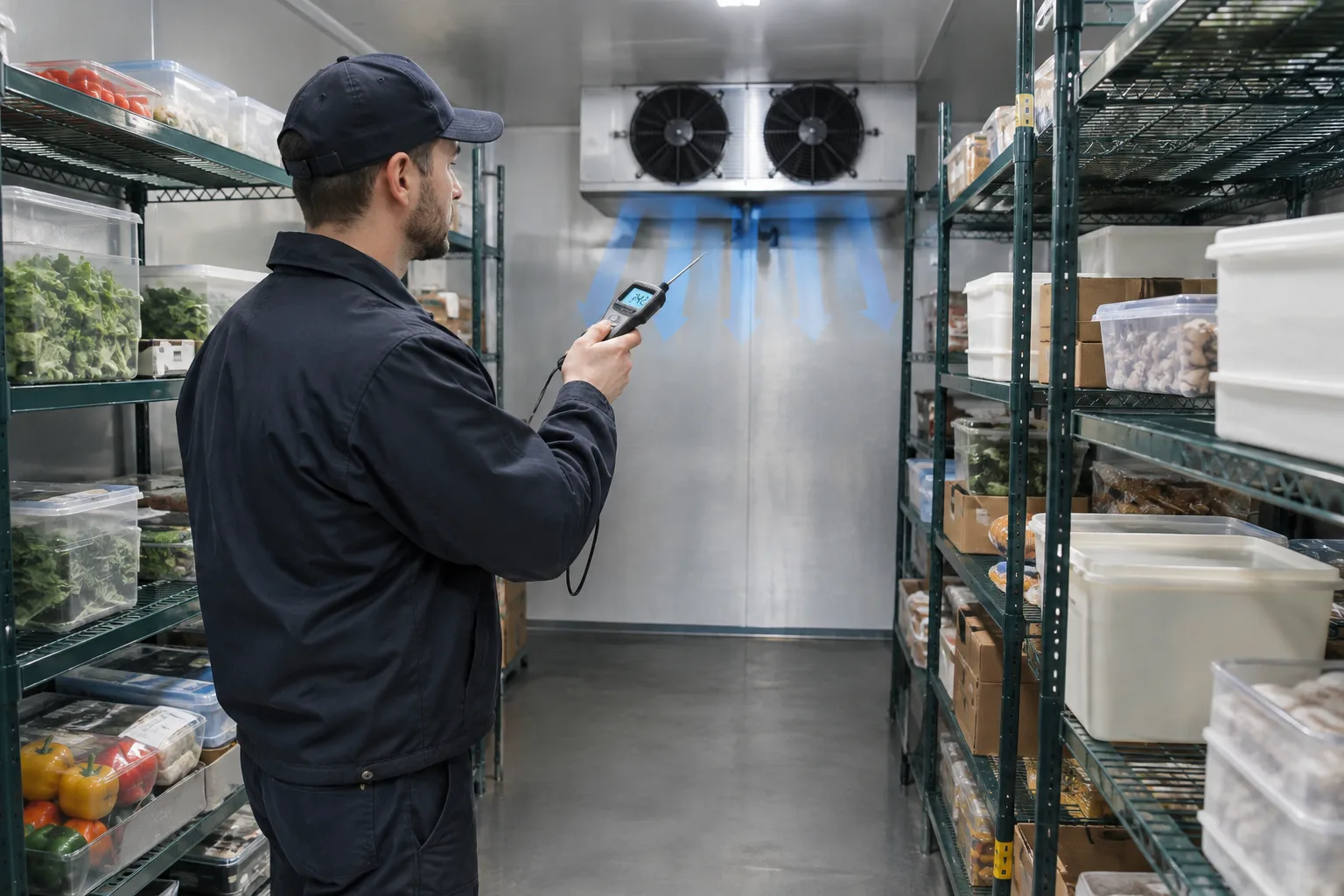
Once repairs are complete, the cooler should be watched closely to confirm that it is holding steady under normal business conditions. Early monitoring helps catch lingering issues before they affect inventory or service.
Useful checkpoints after service include:
- Box temperature at regular intervals during the day
- Door seal quality and how smoothly the door closes
- Presence or absence of frost, water, or condensation
- Sound changes from fans, compressors, or motors
- Whether product placement is allowing proper airflow
It is also helpful to compare the cooler’s behavior before and after service so you can see whether the original symptoms have been resolved. If the system drifts again, document what changed and let your refrigeration service provider know.
When to Call a Technician
Some cooler issues can wait for a scheduled visit, but others need prompt attention to reduce risk to inventory and operations. If the box is losing temperature, icing over, or showing repeated drain or door-seal problems, it is time to bring in commercial refrigeration repair support.
Call for service sooner rather than later if you notice:
- Temperature rising and staying outside your normal range
- Repeated ice buildup after you have cleared the area
- Water leaks that keep returning
- Fans, motors, or compressors that do not sound or run normally
- A door that no longer seals well enough for reliable operation
Food-safety guidance from public agencies emphasizes keeping perishable food at safe temperatures. If your cooler is not dependable, contact Golden Gate Refrigeration by phone at (415) 823-9890 or through the website service-request form to discuss the issue and confirm availability for the San Francisco Bay Area or Greater Sacramento.
Safety boundary: Use this checklist for observation and recordkeeping only. Electrical testing, refrigerant work, control changes, and repairs should be completed by a qualified commercial refrigeration technician.
Common Repair Questions
Business owners and property managers often ask a few of the same questions when a walk-in cooler starts acting up. These answers can help you decide what to watch and what to report during the service call.
What are the most common reasons a walk-in cooler stops cooling well? Common causes include dirty coils, damaged door gaskets, blocked airflow, drain problems, control issues, and mechanical or refrigerant faults. Several issues can happen at the same time, so a professional inspection is often needed to identify the true cause.
Can I keep using the cooler if it is only a little warm? If the cooler is not holding its normal temperature, you should monitor it closely and arrange service as soon as practical. Even a small temperature drift can signal a bigger issue and may affect food safety or inventory quality.
Does Golden Gate Refrigeration service both refrigeration and HVAC equipment? Yes. Golden Gate Refrigeration offers commercial HVAC, commercial refrigeration repair, emergency refrigeration repair, walk-in cooler repair, and walk-in freezer repair for the San Francisco Bay Area and Greater Sacramento.
Get Reliable Cooler Help
Walk-in cooler problems rarely improve on their own. If your system is showing warning signs, the safest next step is to arrange a professional inspection and talk through the symptoms with a commercial refrigeration specialist.
Golden Gate Refrigeration serves the San Francisco Bay Area and Greater Sacramento and can help with commercial refrigeration repair, commercial HVAC, emergency refrigeration repair, walk-in cooler repair, and walk-in freezer repair. Call (415) 823-9890 or use the website service-request form to discuss your equipment and confirm availability.