Walk-In Cooler Cleaning Tasks That Support Reliable Operation
Routine cleaning and inspection can help commercial walk-in coolers run more consistently. This guide explains the maintenance tasks that may reduce wear, support airflow, and help operators spot problems early.
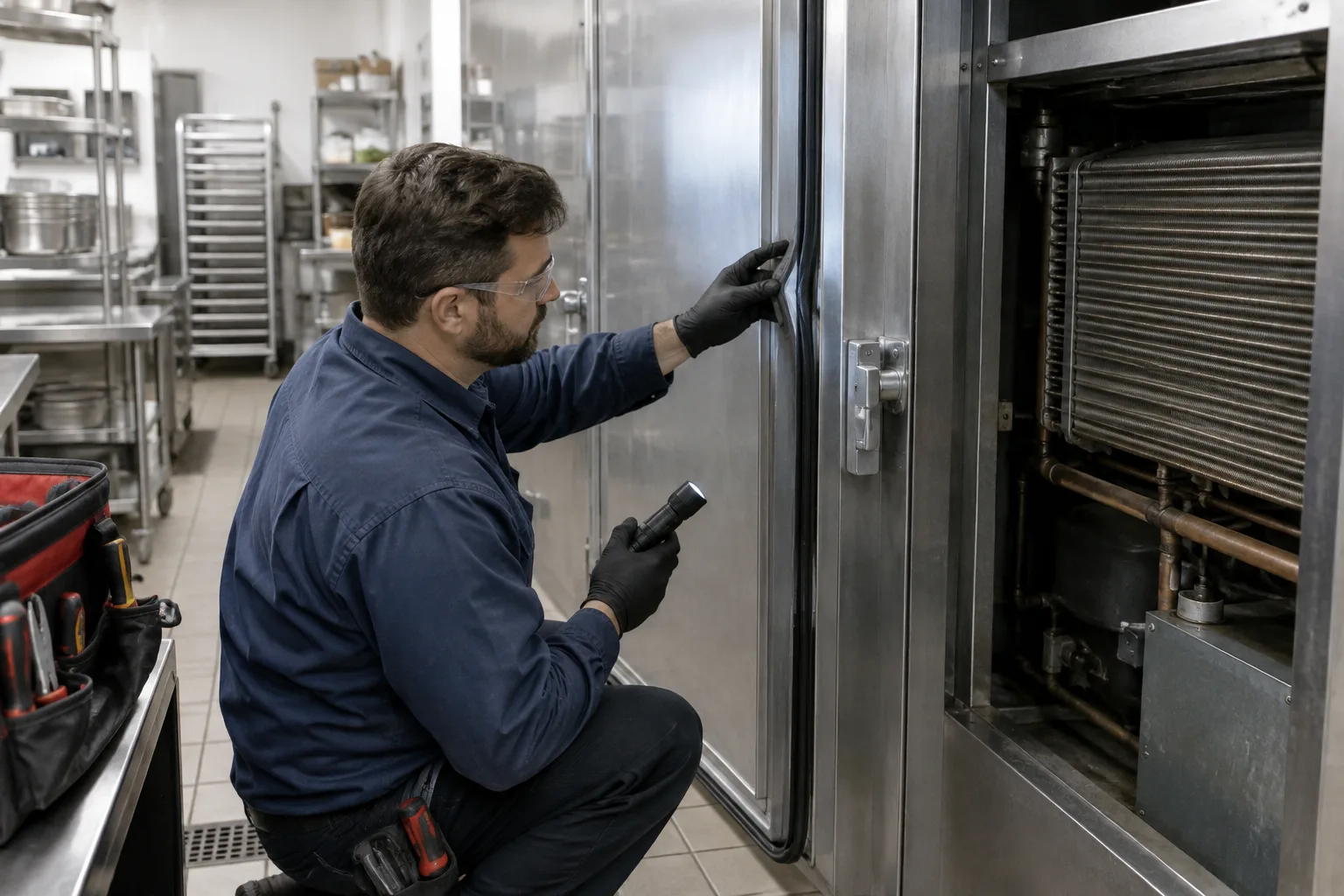
Maintenance That Prevents Repairs
Routine upkeep is one of the simplest ways to support reliable walk-in cooler performance. In commercial kitchens, supermarkets, and other food-service environments, small issues such as dirt buildup, weak door seals, or blocked airflow can add strain to refrigeration equipment over time.
ASHRAE describes walk-in coolers as commercial refrigeration equipment that depends on proper airflow, clean coils, intact gaskets, and sound door hardware to operate as intended. ENERGY STAR also recommends regular attention to coils, gaskets, and other maintenance points that affect efficiency and performance. Those basic tasks do not replace professional service, but they can help operators notice wear before it becomes a larger problem.
Check Maintenance Gaps
If a walk-in cooler is not holding temperature as expected, the first question is often whether routine upkeep has been delayed. A worn door gasket, dirty condenser coil, or blocked evaporator airflow can all affect how hard the system has to work.
Operators can start by asking whether the cooler has been cleaned on a regular schedule and whether anyone has recently checked the door, hinges, drain area, and visible coil surfaces. Missing maintenance does not prove a mechanical failure, but it can help explain why the system is running less efficiently or showing early warning signs.
What Maintenance Prevents
Regular cleaning and inspection can help reduce several common refrigeration problems:
- Restricted airflow around coils and fan components
- Moisture buildup from clogged drains or poor door sealing
- Extra wear on compressors and fans when the system runs longer than necessary
- Temperature swings caused by heat infiltration through damaged gaskets or misaligned doors
ASHRAE notes that maintenance matters because walk-in equipment depends on balanced airflow and clean heat-exchange surfaces. When those basic conditions change, performance can decline even if no major part has failed.
Wear Points That Fail First
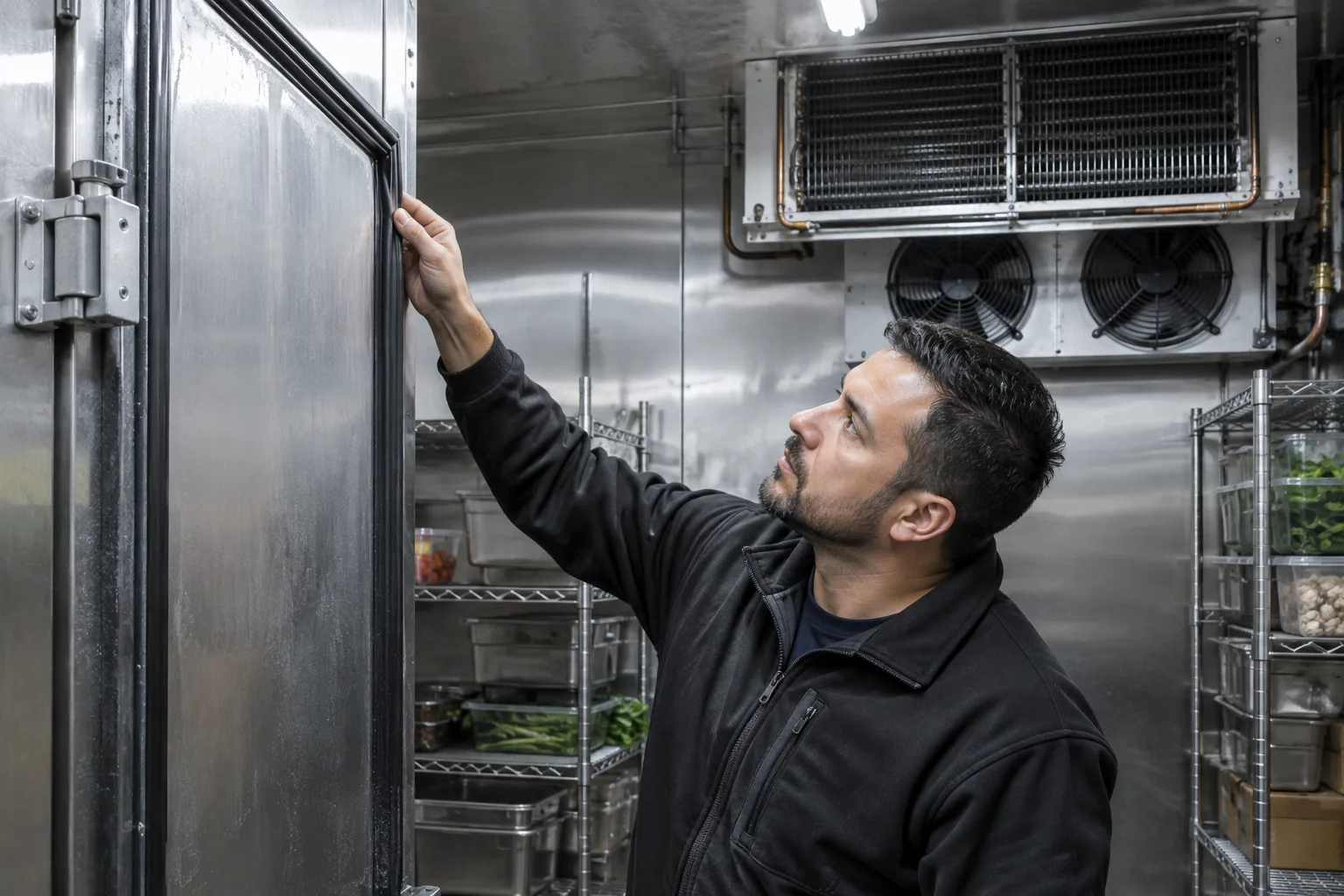
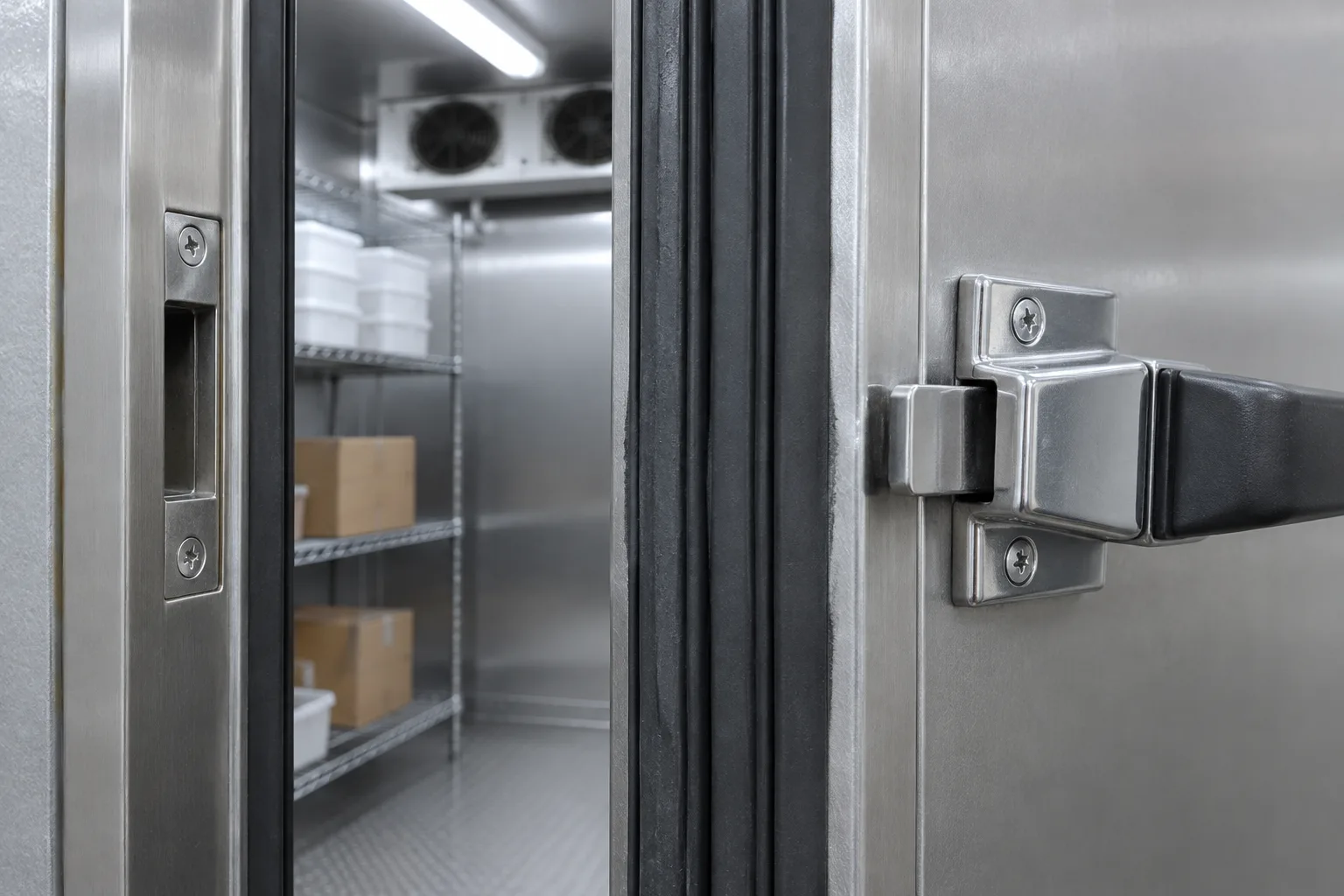
Some parts of a walk-in cooler usually show stress before others. Door gaskets may crack, flatten, or separate from the frame. Hinges and latches can loosen or drift out of alignment. Coil surfaces can collect dust, grease, or debris that reduces heat transfer.
Drain lines and pans can also collect buildup that leads to standing water, odors, or ice formation in the wrong places. These issues are often gradual, which is why regular visual checks are useful. They give operators a chance to catch damage while it is still minor.
Signs Upkeep Is Due
Cleaning and inspection may be overdue when a cooler shows one or more of these conditions:
- Visible frost near the evaporator or around doors
- Warm spots inside the box or inconsistent product temperatures
- Air leaking around the door edge
- Unusual fan noise or longer run cycles
- Water on the floor near the unit or drain area
- Grease, dust, or debris on accessible surfaces and coils
These symptoms do not identify the exact failure on their own, but they often point to maintenance items that should be checked first.
Costs of Skipping Care
When upkeep is delayed, the equipment may have to work harder to maintain set temperatures. That can increase wear, raise energy use, and make breakdowns more likely over time. For food-service businesses and commercial property managers, those effects can also create scheduling pressure when repairs are needed during busy operating hours.
ENERGY STAR guidance emphasizes maintenance steps such as coil cleaning and gasket inspection because neglected parts can reduce efficiency. In a commercial setting, even small losses in performance matter when the cooler protects perishable inventory and supports daily operations.
Simple Checklist Items
Some routine checks are basic enough for operators or facility staff to perform safely, as long as they avoid taking apart sealed components or working on electrical or refrigerant systems without proper training.
- Inspect door gaskets for cracks, gaps, or flattened sections.
- Check that the door closes fully and latches without resistance.
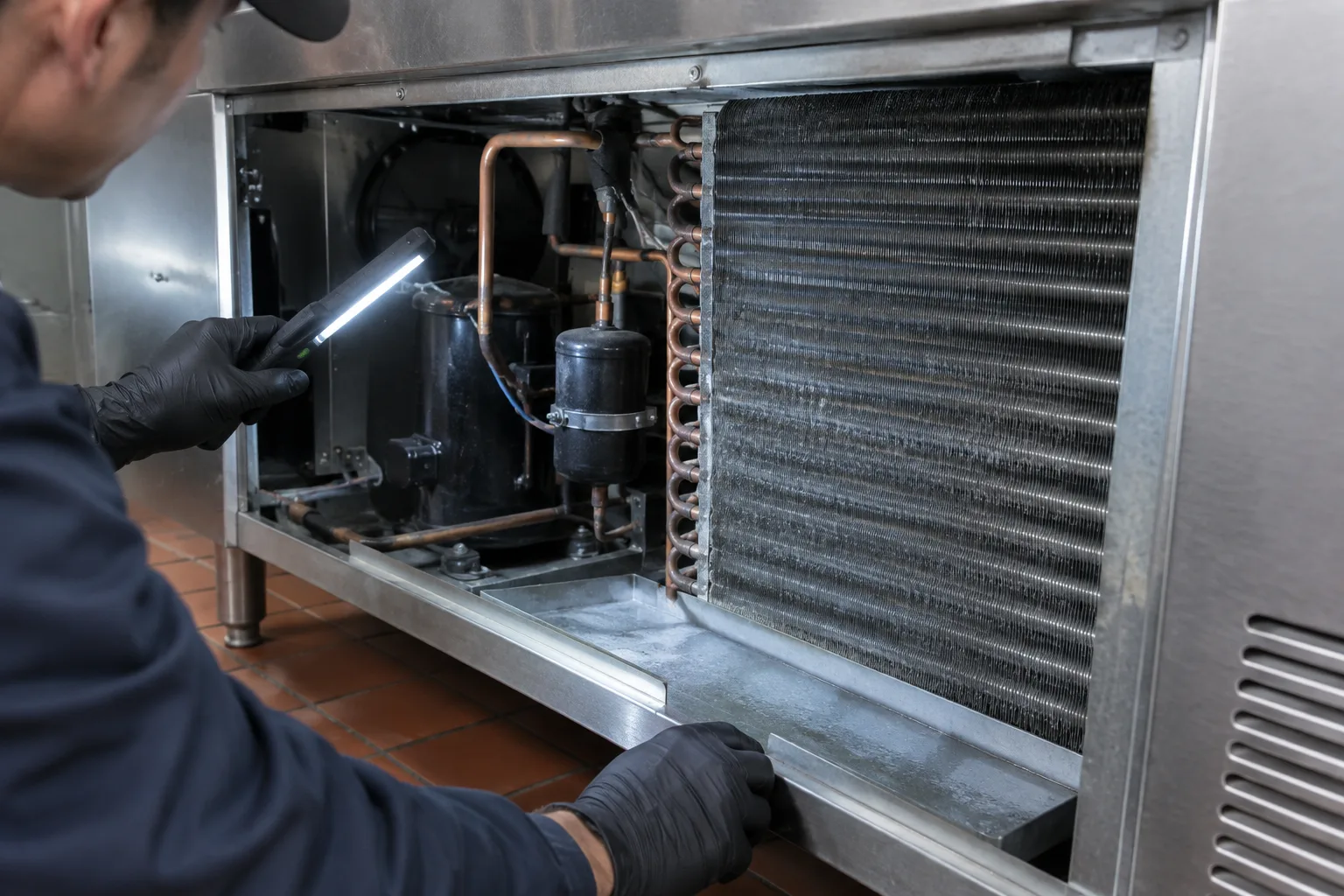
- Look for debris, dust, or grease on accessible coil surfaces and surrounding areas.
- Confirm that airflow inside the box is not blocked by stored product.
- Watch for standing water, ice buildup, or signs of drainage trouble.
- Record unusual temperature readings, noises, or run-time changes.
If any of these checks reveal a pattern that keeps returning, professional refrigeration service may be needed to find the underlying cause.
Upkeep Errors to Avoid
One common mistake is treating routine cleaning as the whole maintenance plan. Wiping surfaces helps, but it does not address worn gaskets, loose hinges, dirty coils, or drainage problems that can continue to affect performance.
Another mistake is blocking airflow with product boxes or shelving. Walk-in coolers need clear circulation paths so evaporator air can move through the box. Operators should also avoid using harsh cleaning methods on fragile seals or finned coil surfaces, since damage in those areas can create new problems.
Finally, it is a mistake to ignore small changes because the cooler is still running. A door that does not close cleanly, a section of frost that keeps returning, or a growing temperature swing can be an early sign that professional refrigeration service is needed.
Routine Tasks That Help
Helpful upkeep usually focuses on simple, repeatable tasks: clean accessible coil areas, check door gaskets for wear, confirm that doors latch correctly, keep drainage areas clear, and review the condition of hinges and hardware. ENERGY STAR recommends regular attention to coils and gaskets because those parts affect efficiency and reliability.
For commercial kitchens, supermarkets, and other food-service operations, the goal is not perfection. The goal is consistency. A basic maintenance routine can help a walk-in cooler stay cleaner, run with less strain, and show developing issues before they interrupt service.
Track Wear Over Time
Logging maintenance work can make small changes easier to spot. Record temperatures, unusual sounds, visible frost, water around the unit, and any repairs or parts replacements. A short maintenance note after each inspection can show whether a problem is improving, stable, or recurring.
This kind of record is especially useful when several staff members share equipment responsibilities. It gives managers a clearer view of trends and helps a service technician understand what has changed since the last visit.
Know When to Call Techs
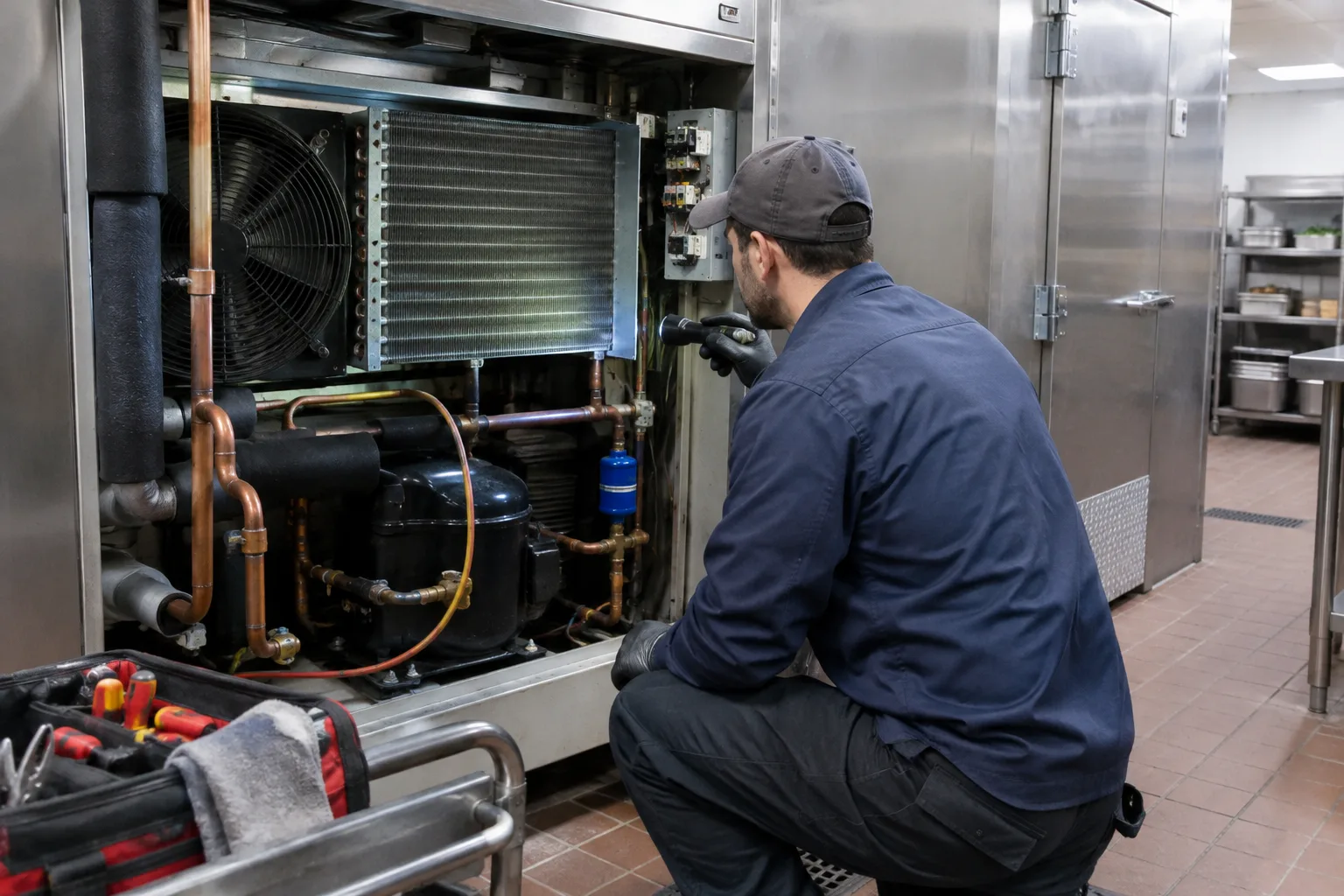
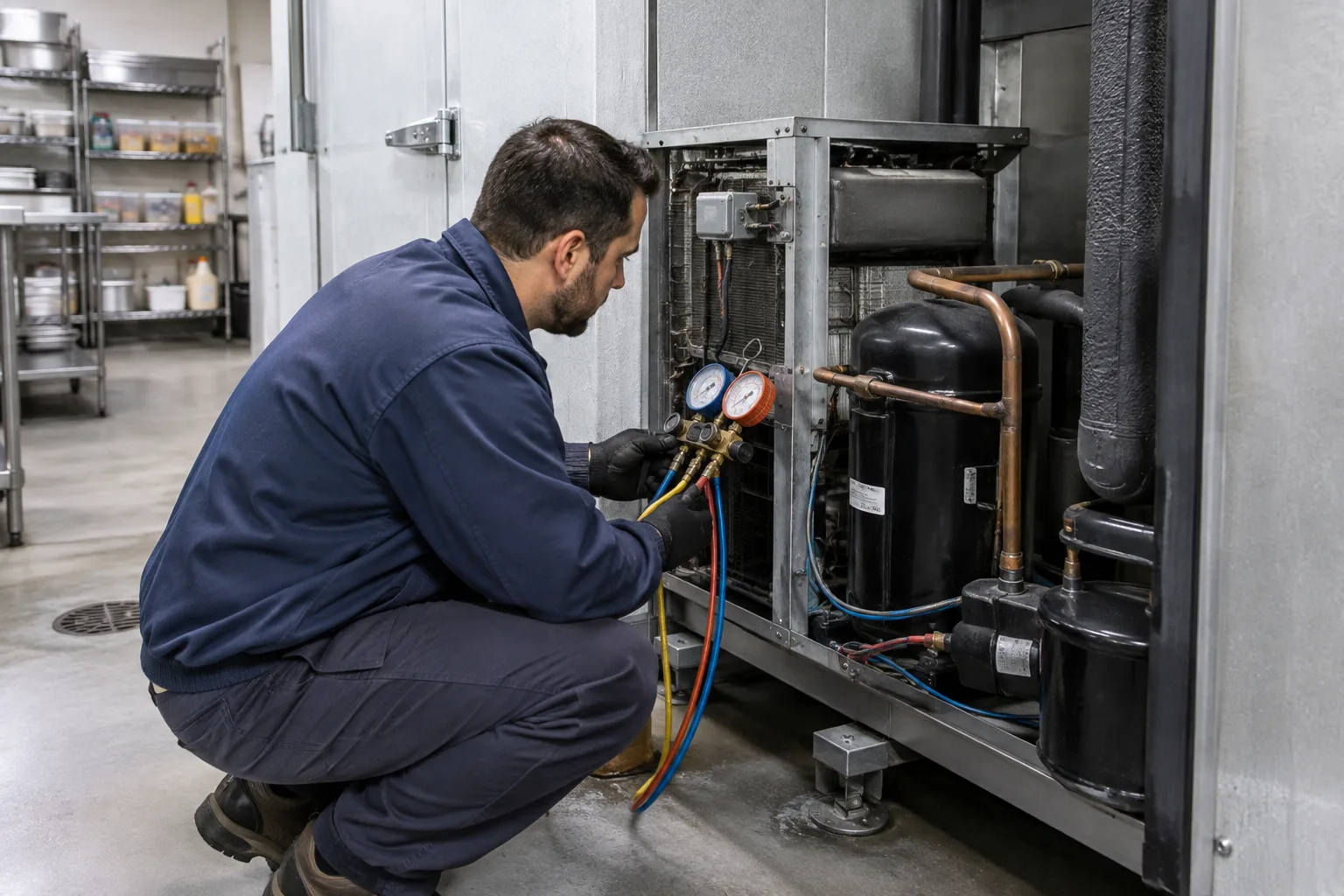
Professional refrigeration service is appropriate when cleaning and inspection do not solve the issue, or when the problem involves electrical, refrigerant, compressor, or fan-system components. Repeated icing, persistent temperature drift, leaking water, or damaged hardware can also warrant service.
If your walk-in cooler is showing signs of wear or maintenance gaps, Golden Gate Refrigeration can discuss the equipment and confirm availability in the San Francisco Bay Area and Greater Sacramento. Call (415) 823-9890, email Info@goldengateref.com, or use the website service-request form to request help.
Safety boundary: Use this checklist for observation and recordkeeping only. Electrical testing, refrigerant work, control changes, and repairs should be completed by a qualified commercial refrigeration technician.
Maintenance Questions Answered
Below are a few common questions operators ask when they want to reduce wear and keep walk-in cooler maintenance practical.
How often should walk-in cooler maintenance be checked? The right interval depends on the equipment, usage, and environment, but regular inspections are important. Many operators build checks into their normal cleaning and facility routines so issues do not go unnoticed for long.
Which maintenance items matter most for walk-in coolers? Door gaskets, coil cleanliness, airflow, drainage, and door hardware are among the most important items. These areas directly affect sealing, temperature stability, and system strain.
When is maintenance no longer enough? If a cooler keeps icing up, loses temperature, leaks water, or shows recurring hardware or airflow problems, the issue may be beyond routine upkeep. A qualified refrigeration technician should inspect it.
Start a Better Maintenance Plan
Routine cleaning and inspection will not prevent every breakdown, but they can help reduce strain and make problems easier to catch early. For businesses that depend on reliable cold storage, that consistency matters.
If you want help evaluating your walk-in cooler condition, contact Golden Gate Refrigeration to discuss your equipment and next steps.